







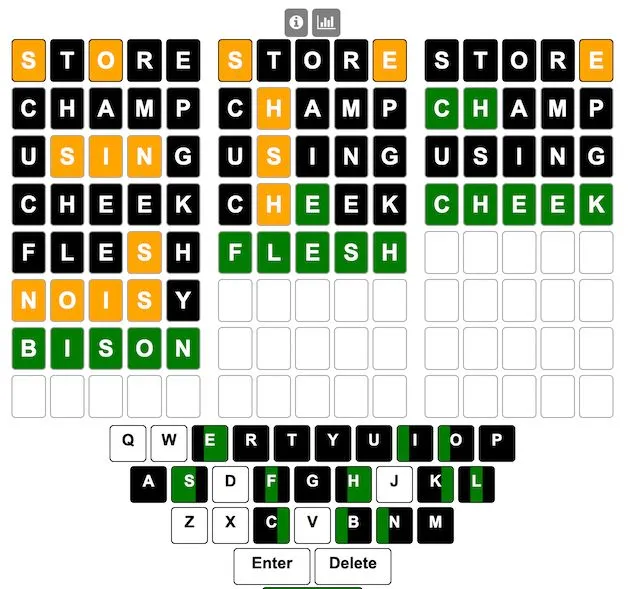
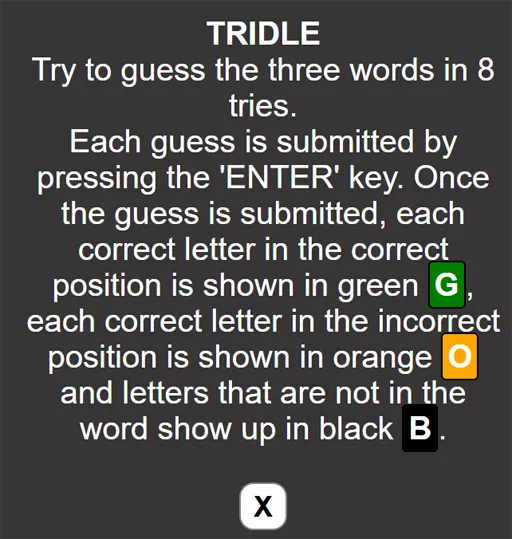
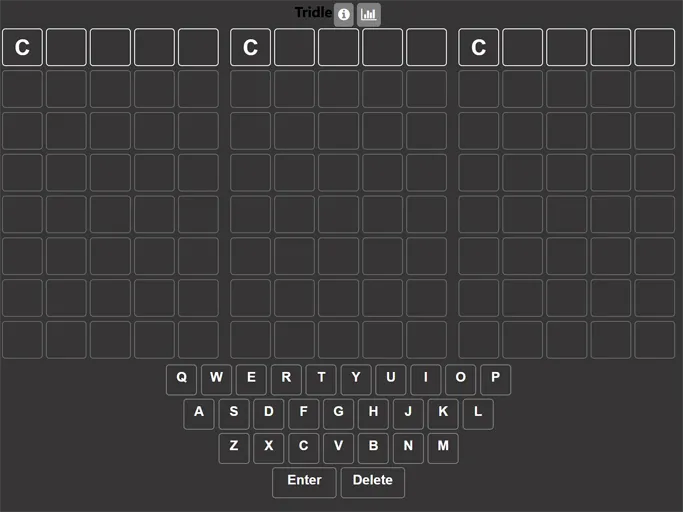
The defining trick in tridle is synchronization. Your fingers type once, but your eyes must read three responses. That split is what separates it from playing three normal puzzles back to back. Information gained on the left board might only matter as elimination on the right, and a strong opener is measured by total color coverage rather than how quickly one column turns green.
Fans of twin-grid games often describe tridle as the point where casual multitasking turns into real planning. You are still using vocabulary and tile logic, but the scarce resource is attention across eight rows, not knowledge of a single word.