






7 Letter Wordle
Games similar to 7 Letter Wordle

7 Letter Wordle

7 Letter Wordle

Seven letters change the game. The standard five-letter format gives solvers a relatively tight search space; stretching that to seven forces you to hold more possibilities in mind at once, and the word list draws from a much wider pool of everyday vocabulary. If you have been finding five-letter rounds too comfortable, this is the natural next step.

On Wordles.org you can play 7 Letter Wordle as many times as you want. There is no daily cap, no waiting until midnight for a new puzzle. Finish one round and start the next immediately. Your guess history and win streaks are saved locally in your browser, so your stats carry forward between sessions.

The core rule is unchanged: guess the hidden word within six attempts. Each guess must be a real seven-letter English word. After you submit, every tile changes color to show you exactly what you got right, what is present but misplaced, and what does not belong at all. Six guesses is generous enough that patience and good letter coverage usually win out.

How to Play 7 Letter Wordle

1
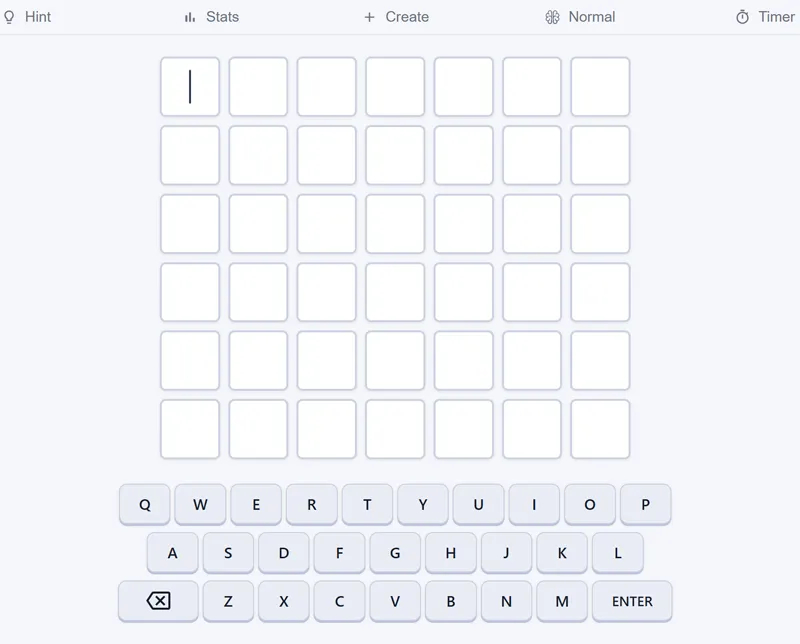
7 Letter Wordle game board showing the first guess

Type a seven-letter word and press Enter

Your opening guess does not need to be clever. A word that spreads common letters across all seven positions gives you the most information from the very first row. Avoid repeating letters in your opener.

2

Read the color feedback

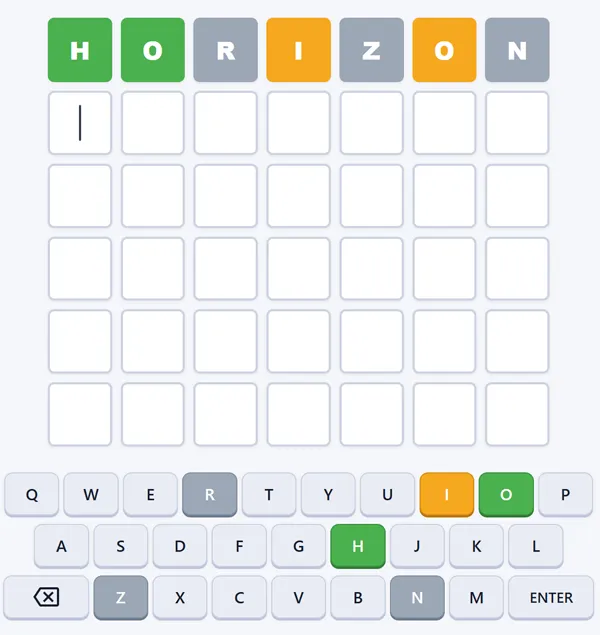
Green means that letter is correct and in the right position. Yellow means the letter exists in the word but sits somewhere else. Gray means the letter is not in the word at all. Every color gives you a constraint to work with on the next guess.

3

Build on what you know

Lock green letters in place and shuffle yellow letters to untried positions. Cross off gray letters entirely. A guess that respects all three types of feedback is almost always stronger than one that ignores any of them.

4

Keep going until you solve it or use all six tries

You have six rows. There is no penalty for a wrong guess beyond losing a row, so commit to each attempt rather than hedging. If the word escapes you this round, a new puzzle starts immediately and your stats update.

Why seven letters feels harder

Five-letter Wordle has a relatively compact answer space. Most players develop a reliable two or three-guess opener routine that quickly narrows the field. At seven letters, that routine stops working as cleanly because the answer pool is far larger and common openers cover a smaller proportion of likely letters in longer words.

Seven-letter words also tend to carry more prefixes and suffixes. Guessing a word with a common ending like -tion or -ing can confirm three or four letters at once, but it also means the meaningful variation is concentrated in the middle of the word, where it is hardest to isolate. Learning to read the board from the inside out, rather than anchoring to the first or last letter, is the main skill shift between five-letter and seven-letter play.

Getting more out of each guess

The most common mistake in longer Wordle variants is spending guesses on words that share too many letters with previous attempts. If you already know a letter is gray, using it again wastes a position. Seven positions give you more room, but that room disappears quickly if you are not disciplined about crossing off confirmed misses.

A useful habit is to count confirmed letters before typing each new guess. If you have three green tiles and two yellows, you need a word that fits those five constraints and ideally introduces two completely fresh letters in the remaining spots. That approach extracts information from every guess rather than cycling through variations of a theme that is already half-disproved.

When you are stuck with two or three guesses left, it can be tempting to make a wild attempt. A better move is to spend one of those guesses on a word you are confident is wrong but that covers as many untested letters as possible. The information gain from a deliberate probe often unlocks the answer on the final row.

The history behind the format

Wordle was created by Josh Wardle, a software developer based in New York, originally as a private puzzle for his partner. He released it publicly in late 2021 and it spread rapidly after players discovered they could share their colored grid results on social media without spoiling the answer. The New York Times acquired the game in early 2022.

The viral mechanic was not the puzzle itself but the shareable summary: a compact emoji grid that communicated difficulty without revealing the word. That format traveled well on Twitter and group chats, and it turned a solitary word game into a daily shared ritual for millions of people. Variants with different word lengths, including four, six, seven, eight, and nine letters, appeared quickly as players who wanted more challenge or variety created their own versions. Wordles.org collects those variants in one place so you can move between lengths without leaving the site.

FAQs about 7 Letter Wordle

No. Wordles.org runs 7 Letter Wordle in unlimited mode, so you can play back to back without any daily cap. Each round picks a fresh word from the seven-letter list.
Yes. Every guess must be a recognized seven-letter word. If the word you typed is not in the accepted list, the board will not submit it and you keep that row for another try.
Yes, repeated letters are allowed. If you see the same letter highlighted twice in one guess, with different colors, the word likely contains that letter more than once. Pay attention to counts, not just positions.
Words that spread high-frequency consonants and at least two or three vowels across all seven positions tend to work well. There is no single correct opener, but variety in your starting letters beats repeating a favorite every round.
Yes. Hard mode requires that every confirmed letter from previous guesses must appear in your next guess. It raises the stakes considerably because you cannot freely probe new letters once you have found correct ones.
Yes. Games played, win percentage, and current streak are stored in your browser. Clearing your browser data will reset them, but as long as you play on the same device they persist across sessions.
The only structural difference is word length. Longer words mean more letter positions to fill, a larger vocabulary pool, and more possible answers per session. The six-guess limit and color-coded feedback work exactly the same way.