















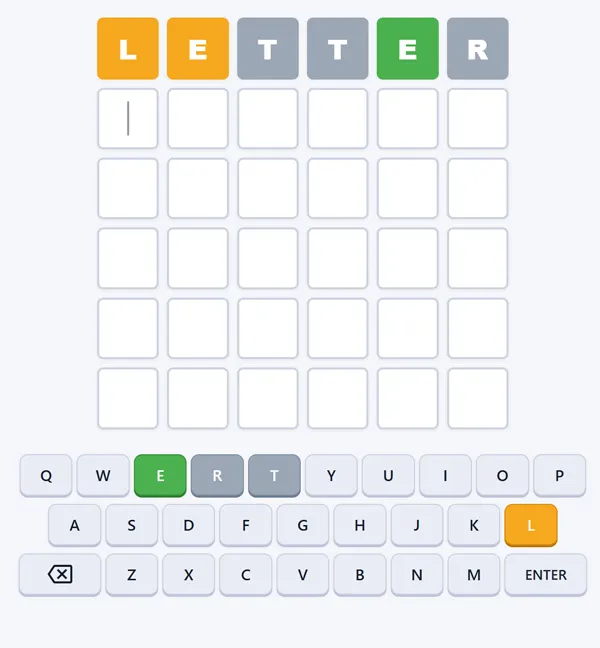
Going from five letters to six sounds like a small adjustment. In practice it shifts the character of the game in ways that only become obvious once you are a few rounds in. The five-letter word pool is compact enough that experienced players build an intuition for which answers are likely. Six-letter words do not behave the same way. The vocabulary is broader, the common patterns are different, and the instincts built on five-letter play do not transfer cleanly.
One specific difference is the role of suffixes. A confirmed -ing or -ness ending cuts the possibility space dramatically, but it also tempts players into locking onto one word family too early. Two yellow letters that look like the start of a familiar ending might belong to a completely different configuration. The extra column rewards players who stay systematic rather than those who commit to a hunch after one or two clues.