








Wordless
Word guessing Games like Wordless

Wordless

Wordless

Wordless is a word puzzle that gives you six attempts to identify a hidden word, with one twist that separates it from most games in the genre: you choose how long the word is. Words range from three to eight letters, so you can set the difficulty to match how much of a challenge you want on any given session. A shorter word can still trip you up when the vocabulary is unfamiliar, and a longer word demands more precise tracking of which letters are confirmed, misplaced, or eliminated.

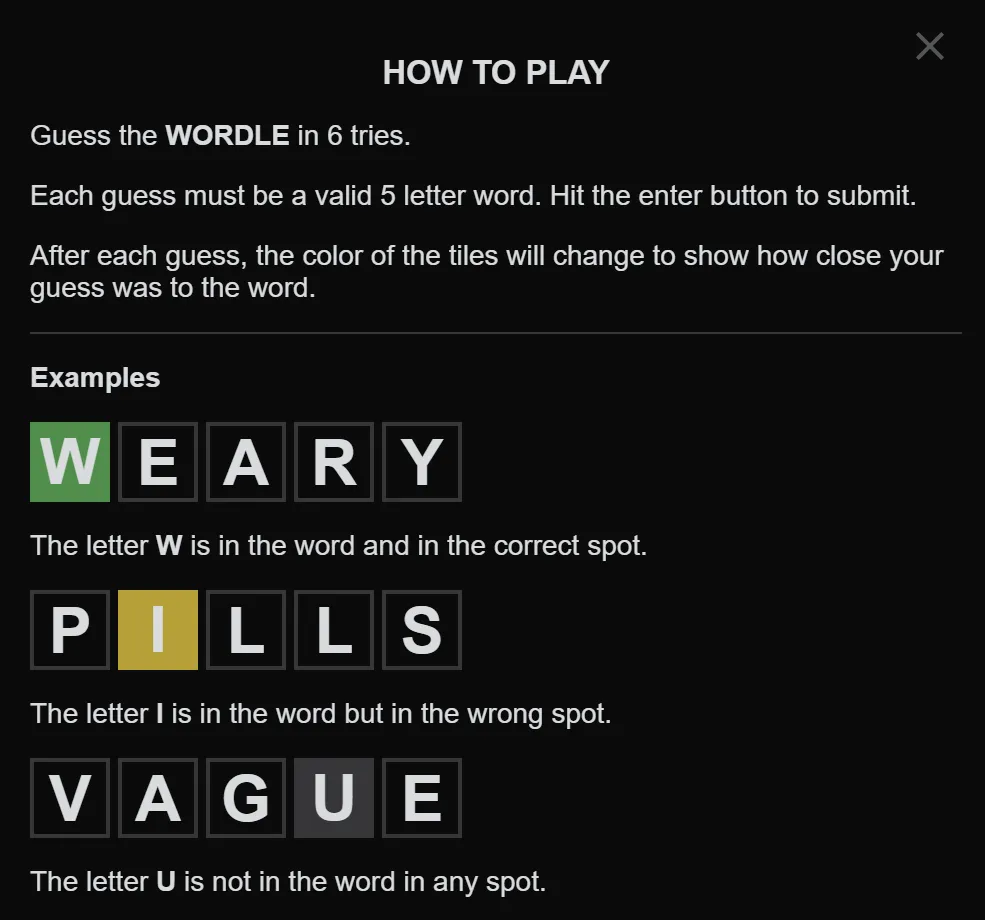
After each guess, every tile changes to one of three colors. Green means the letter is correct and sitting in the right position. Yellow means the letter appears somewhere in the hidden word but is not where you placed it. Gray means the letter is not in the word at all. These three signals, applied consistently across six guesses, give you enough information to narrow down almost any word if you read them carefully.

The game runs entirely in your browser with no account required, and you can reset to a new random word at any time. That flexibility makes it suitable for a quick single round or a longer session across several different word lengths back to back.

How to Play Wordless

1
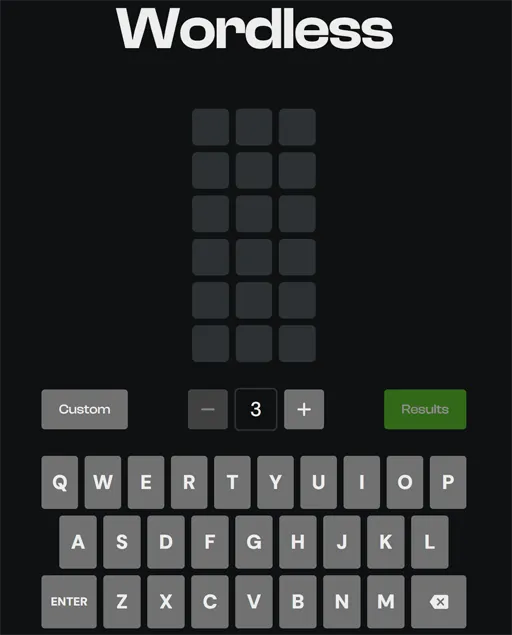
Wordless game board showing word length selector and first guess being entered

Choose your word length and make your first guess

Before starting, use the plus and minus buttons to select a word length between three and eight letters. Once you are happy with the length, type a valid English word of that length into the first row and press Enter. Your opening guess works best when it covers a spread of common vowels and consonants, since the color feedback it generates will shape every subsequent guess.

2

Read the color feedback and adjust your next guess

After submitting, each tile reveals a color. Green confirms the letter is in the correct position. Yellow means the letter is in the word but placed incorrectly in your guess. Gray means that letter does not appear in the hidden word at all. Use these results to decide which letters to keep, move, or drop entirely in your next attempt.

3

Work through up to six guesses to find the word

You have six attempts to identify the hidden word. Each guess should apply everything you have learned from the previous tiles: confirmed green letters stay in place, yellow letters need to be repositioned, and gray letters should be left out. If you find the word within six tries, you can reset and try a different length immediately.

Why variable word length changes the game

Most word puzzles fix the target length at five letters, which means every player approaches the game with the same constraints every time. Wordless removes that fixed boundary, and the effect on strategy is more significant than it might initially seem. A three-letter puzzle requires you to work within a much tighter set of possibilities, where a single yellow tile can feel almost definitive. An eight-letter puzzle spreads the same six guesses across far more possible combinations, demanding more disciplined use of each attempt.

Players who are comfortable at one length often find that switching to another exposes habits they did not know they had. Someone who relies on a specific opening word at five letters has to rethink their approach entirely when the target is only four letters long. That forced adaptation is part of what keeps the game interesting across many sessions rather than feeling repetitive after a few rounds.

Building a better opening guess

The first guess in any word puzzle carries more weight than subsequent ones because it operates without any prior information. In Wordless, the best opening guesses tend to be words that distribute vowels across multiple positions and avoid repeating any letter. A guess that confirms or eliminates several letters immediately puts you in a much stronger position heading into your second attempt.

The specific word you choose as an opener should also reflect the length you have selected. Common short words that work well at three letters will not transfer to an eight-letter round, and the vowel distribution that makes a five-letter word an effective opener may not apply at six. Taking a moment to think about which common letters appear frequently in words of your chosen length is worth doing before committing to your first guess.

Reading yellow tiles accurately

Gray tiles are straightforward: those letters are simply not in the word. Green tiles are equally clear. Yellow tiles, however, are where many players lose ground. A yellow tile tells you two things simultaneously: the letter is in the hidden word, and it is not in the position where you placed it. Both pieces of information matter, and ignoring either one wastes the value of that feedback.

A common mistake is placing a yellow letter in the same position on the next guess, which produces another yellow result and uses up an attempt without gaining new information. Moving confirmed yellow letters to a different position in every subsequent guess is one of the most reliable ways to make consistent progress, particularly in longer word puzzles where there are more positions to test.

Getting more from each session

Because Wordless lets you reset to a new word at any time, the structure of your session is entirely up to you. Some players prefer to stay at one word length and work through several rounds, building familiarity with the vocabulary at that length. Others switch lengths after each puzzle to keep the challenge varied. Neither approach is wrong, but each produces different kinds of practice.

Staying at the same length tends to sharpen your ability to apply feedback efficiently within a known set of constraints. Switching lengths forces your brain to recalibrate constantly, which builds broader flexibility. If you find yourself solving a particular length consistently within three or four guesses, it is usually a sign that moving to a longer word will give you more to work with.

FAQs about Wordless

Wordless is a free word-guessing puzzle where you have six attempts to identify a hidden English word. You can choose the word length yourself, anywhere from three to eight letters, which lets you control how difficult each round feels.

After each guess, tiles change color to show how close you were. Green means the letter is correct and in the right position. Yellow means the letter is in the hidden word but placed incorrectly. Gray means the letter does not appear in the word at all. Combining these signals across multiple guesses is how you narrow down the answer.

Use the plus and minus buttons shown before the puzzle starts to set the word length anywhere between three and eight letters. Shorter words move faster but can still be tricky. Longer words require more careful tracking of feedback across all your guesses.

Yes. Wordless is not limited to one puzzle per day. You can press Reset at any time to start a new round with a freshly selected random word. You can also switch word lengths between rounds to vary the difficulty.

All words are common English words drawn from a broad dictionary. The game favors familiar words rather than highly obscure ones, though the range of word lengths means the vocabulary required shifts considerably depending on which length you choose.

Yes. Wordless accepts input from both a physical keyboard and the on-screen keyboard displayed in the game. Press Backspace to delete a letter and Enter to submit your current guess.

If you do not find the word within six attempts, the round ends and the correct answer is revealed. You can immediately start a new round by pressing Reset, applying what you noticed from the previous attempt.

No account, download, or sign-up is needed. Wordless runs directly in your browser and is free to play on any device.