












Foodle Wordle
Word guessing Games like Foodle Wordle

Foodle Wordle

Foodle Wordle

Foodle Wordle takes the familiar six-guess word game format and narrows the playing field to one specific domain: food. Every hidden word is a five-letter term connected to ingredients, dishes, cooking methods, or kitchen staples. That constraint sounds limiting, but in practice it makes the game considerably more interesting because your vocabulary and your knowledge of food have to work together at the same time.

A new puzzle is available each day, so the challenge resets on a fixed schedule. Each guess must be a valid five-letter food-related word. After you submit, the tiles update with color feedback that tells you which letters you got right, which appear in the word but sit in the wrong position, and which are not in the answer at all. Six attempts is enough to solve the puzzle methodically, but not so many that there is no pressure involved.

The game works well for anyone who cooks regularly, follows food culture closely, or simply has a broad vocabulary that happens to extend into culinary territory. It also catches out players who assume that knowing a lot of general words will carry them through, because the food-specific constraint catches a surprising number of otherwise confident guessers off balance.

How to Play Foodle Wordle

1
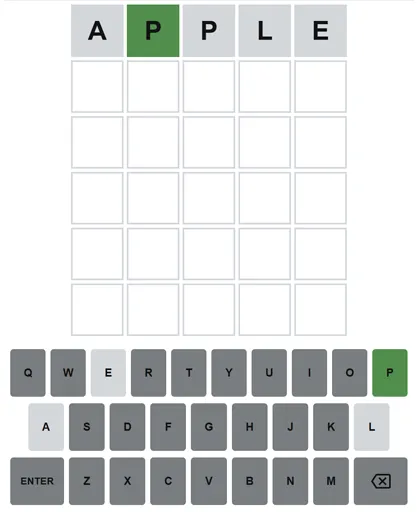
Foodle Wordle game board showing the first guess being entered

Start with a food word you know well

Type a five-letter food-related word into the first row and press Enter to submit. Your opening guess sets the foundation for everything that follows, so a word that spreads common vowels across several positions tends to return more useful color feedback than a very specific or unusual term. Think about everyday food words rather than rare ingredients for your first attempt.

2

Read the color feedback on each tile

After submitting a guess, each tile changes color. A green tile means the letter is correct and in the right position. Yellow means the letter appears in the hidden word but is placed incorrectly in your guess. Gray means the letter does not appear in the answer at all. Use this information to eliminate possibilities and guide your next guess.

3

Narrow down the answer within six tries

Each guess should use what you already know from previous feedback. Confirmed green letters stay in place, yellow letters need to move, and gray letters should be left out entirely. You have six attempts in total. If you find the correct food word before running out of guesses, you can share your result to show how many tries it took.

Why food vocabulary makes a difference here

The food theme in Foodle Wordle is not just a cosmetic choice. It directly shapes which guessing strategies work and which fall flat. In a general word game, a player with broad vocabulary can often find the answer by thinking about common letter patterns across the whole language. In Foodle Wordle, that same player needs to route their thinking through a much more specific part of their knowledge, and the words that come to mind first may not always be the most useful starting points.

Someone who cooks regularly or who has spent time reading about food culture will naturally have a larger pool of five-letter food words to draw from. That does not mean casual players cannot do well; the feedback system is informative enough that even unfamiliar territory becomes navigable with a bit of logic. But the food theme rewards players who bring genuine culinary knowledge to the puzzle rather than just general word game experience.

Building a stronger opening guess

The opening guess in any six-try word game carries more weight than it might seem. A well-chosen first word can immediately eliminate or confirm several letters, giving you a clear direction for the second guess. In Foodle Wordle, the best openers tend to be common five-letter food words that include frequent vowels and spread them across different positions.

Words built around common cooking actions or basic ingredients often perform well as openers because they use letters that appear frequently across the food lexicon. A word that returns three or four colored tiles on the first attempt puts you in a strong position, while an opener that comes back almost entirely gray requires you to do more work in the remaining five guesses. Spending a moment thinking about your first word before submitting it is almost always worth the time.

Using the daily format to your advantage

The daily puzzle structure of Foodle Wordle creates a rhythm that solo practice sessions do not replicate. Because there is only one puzzle per day, each round carries a bit more weight than a game you can replay endlessly. That slight pressure tends to make players more deliberate with each guess rather than rushing through possibilities.

Over time, playing consistently builds familiarity with the kinds of food words the game favors. You start to develop an intuition about which categories of food terms appear more often, which letter combinations come up regularly in culinary vocabulary, and which of your guessing habits tend to leave you with more tiles to resolve in the final attempts. The daily cadence is what turns a puzzle into something you actually get better at.

Tips for when the answer is not coming

Every player reaches a round where the feedback tiles seem helpful but the answer stays just out of reach. When that happens, the most common mistake is continuing to guess variations of a word that is clearly not the answer rather than stepping back and thinking about the confirmed letters in combination with a completely different food word structure.

If you have two or three green tiles confirmed but the remaining positions are not resolving, try thinking about what food words fit the confirmed letters in different surrounding contexts. A spice, a cooking method, a type of cut, or a kitchen tool might use those same letters in a configuration you had not considered. Foodle Wordle rewards lateral thinking within the food domain as much as it rewards raw vocabulary.

FAQs about Foodle Wordle

Foodle Wordle is a daily word-guessing game where the hidden answer is always a five-letter food-related word. You have six attempts to find it using color-coded tile feedback after each guess.

Every guess must be a five-letter word connected to food in some way. This includes ingredients, dish names, cooking terms, and kitchen-related vocabulary. Generic words that have no food connection are not accepted as valid entries.

Green means the letter is correct and in the right position. Yellow means the letter is in the hidden word but placed incorrectly in your current guess. Gray means the letter does not appear in the answer at all. Using these three signals together lets you narrow down the answer with each attempt.

You get six guesses per round. Each one must be a valid five-letter food word. If you do not find the correct answer within six attempts, the puzzle ends and the word is revealed.

Yes. A new hidden food word is available each day. The puzzle resets every 24 hours, so each day presents a completely fresh challenge with a different answer.

Yes. After completing a round you can share a color grid summary of your guesses. The result shows how many attempts it took without revealing the actual word, so you can post it without spoiling the answer for others.

It depends on how much food vocabulary you have. The food-only constraint removes a large portion of the words you might otherwise fall back on in a general word game. Players with a broad culinary vocabulary tend to find it manageable, while others encounter the restriction more sharply.

No. The game runs entirely in your browser and is free to play. No app, account, or sign-up is required on any device.