












Stepdle
Word guessing Games like Stepdle

Stepdle

Stepdle

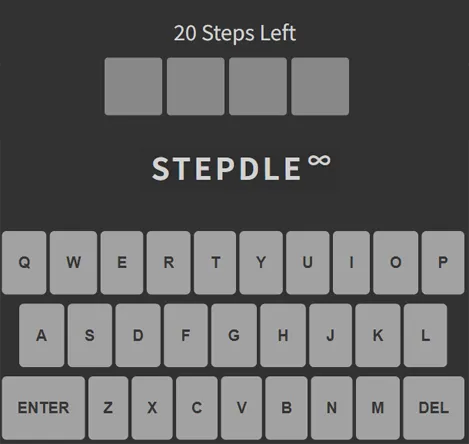
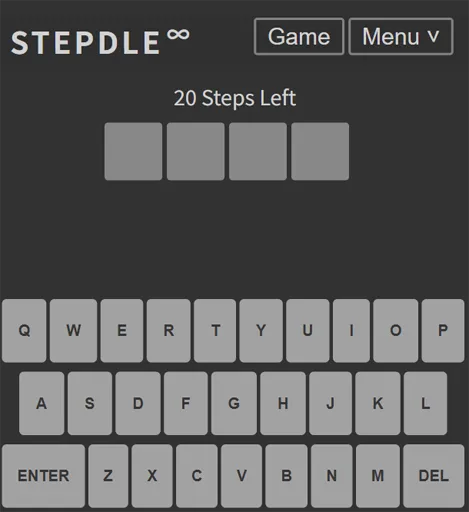
Stepdle, built by Sachin Giri, turns a single puzzle session into a short ladder of four unrelated words. You begin on a four-slot board, then climb to five, six, and seven slots as each answer is found. The catch is the budget: twenty guesses total for the entire run, and the counter does not refill when you move to the next word. Every row you spend on an early target is a row you cannot use later when the grid grows wider.

The four answers do not theme together. Solving a short animal name does not hint at the seven-slot word waiting at the top. That independence keeps stepdle from feeling like a sentence broken into pieces. It plays more like four mini puzzles stitched into one scorecard, where green, yellow, and gray tiles still guide each attempt but the real skill is rationing effort before the ladder gets tall.

How to Play Stepdle

1
Stepdle four slot opening board with color tile feedback

Crack the four-slot word first

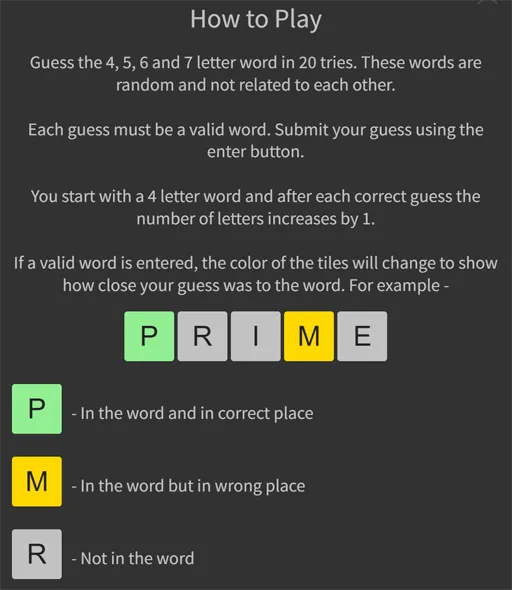
Open stepdle and you face a four-character target with the full twenty-guess pool still available. Submit valid dictionary words and read the tile colors. Green locks a symbol in place, yellow shows it belongs elsewhere in that word, and gray removes it from consideration. Because the later boards add slots, a clean solve here leaves more room for the five and six character stages ahead.

2
Stepdle board expanding from four to seven slots across stages

Climb the length ladder

After you reveal the first answer, stepdle adds one slot and loads a fresh unrelated word. The pattern continues through five, six, and seven characters. Your remaining guess count carries over exactly as it left off. There is no separate six-try reset per stage. The board height increases while your allowance shrinks, which is the central tension of every stepdle session.

3

Win the run or plan the next attempt

You complete stepdle only when all four words fall before the twentieth guess is used. Run out of rows on the six-slot stage and the entire attempt ends even if the final seven-slot word never appears. On this page you can replay unlimited sessions, so a failed budget is a chance to adjust how aggressively you spend early guesses on the shorter boards.

One counter, four different grid sizes

Most word puzzles treat every board as its own island with a fresh set of attempts. Stepdle links them with a single dwindling number in the corner. That design choice sounds small until you burn five guesses on a stubborn four-slot word and realize the seven-slot finale may only have eight rows left. Suddenly a casual opener feels expensive.

Players who enjoy stepdle often describe it as resource management dressed up as a vocabulary game. You are still reading color feedback and hunting valid words, but you are also asking whether this guess is worth the cost before the ladder reaches its full height.

Why the first word matters more than it looks

A four-slot target should be quick. Sometimes it is. Other times the answer is an obscure plural or a spelling you rarely type, and the stepdle counter ticks down while the board stays unsolved. Those lost rows are gone forever in that session. Conservative play on stage one is boring on paper and smart in practice.

Aim for openers that test vowels and common consonants without chasing a lucky instant solve. Two or three informative rows on the shortest word often preserves enough budget for the six and seven slot boards where permutations multiply and gray tiles become precious.

The ladder gets harder in two directions

Difficulty in stepdle rises in parallel. Each new stage adds a slot, which widens the search space, while your remaining guesses shrink because of everything you already spent below. The six-slot board is often the tipping point. You still have vocabulary tools from earlier colors, but the word itself may be less common than the short opener suggested.

Because answers are unrelated, you cannot lean on a theme to brute force the top word. Each stage stands alone with only the shared counter linking them. That structure keeps stepdle distinct from marathon games that repeat the same width thirty times or daily puzzles that stop after one five-slot win.

Unlimited runs, same tight budget

The unlimited version on Wordles lets you retry the ladder without waiting for a calendar reset. A failed run where you ran out of guesses on word three becomes a lesson in pacing rather than a dead end until tomorrow. Many players track personal records for how many guesses remain when they clear all four words.

Stepdle fits short breaks because a full attempt can finish in a few minutes when the budget is handled well, yet it still offers enough depth to replay after lunch. The combination of escalating width and a hard cap on rows gives the game a personality that is easy to explain and surprisingly hard to optimize.

FAQs about Stepdle

Each stepdle session has four hidden words. They use four, five, six, and seven slots in that order. The words are random and not connected by topic.

You receive twenty guesses for the full run. The pool is shared across all four words. Correct answers do not grant extra tries.

No. Whatever you used on the four-slot and five-slot boards subtracts from the same total available for the six and seven slot stages.

Green means the symbol is correct for that slot. Yellow means it is in the current word but belongs in a different position. Gray means it is not in that word at all.

The grid adds one slot immediately after you solve the current word. You move from four to five, then six, then seven characters as you progress through the ladder.

No. Each target is independent. Clues from an earlier word do not carry into the next stage beyond the guess count you still have left.

Yes. The version embedded here supports unlimited replays. Finish a run or fail the budget, then start a fresh stepdle ladder whenever you want.