












Posterdle
Word guessing Games like Posterdle

Posterdle

Posterdle

Posterdle asks a different question from most daily puzzles on this site. There is no five-slot grid and no keyboard of tiles. A movie poster appears heavily blurred, a timer starts, and you try to name the film before the clock runs out. You also get up to six title guesses if the image stays stubbornly vague. The artwork slowly sharpens while time passes, so patience can buy detail, but hesitation eats the same twenty seconds that reward a fast correct call.

The skill being tested is visual recall, not spelling patterns. You might recognize a superhero palette before you can read a logo, or spot a floating-head layout that screams late nineties romance long before a face becomes clear. Posterdle sits close to music-guess games in spirit, except the clue is static art that reveals itself instead of an audio clip that grows longer. Film fans get an immediate hook. Casual viewers can still play by leaning on genre, era, and color.

How to Play Posterdle

1
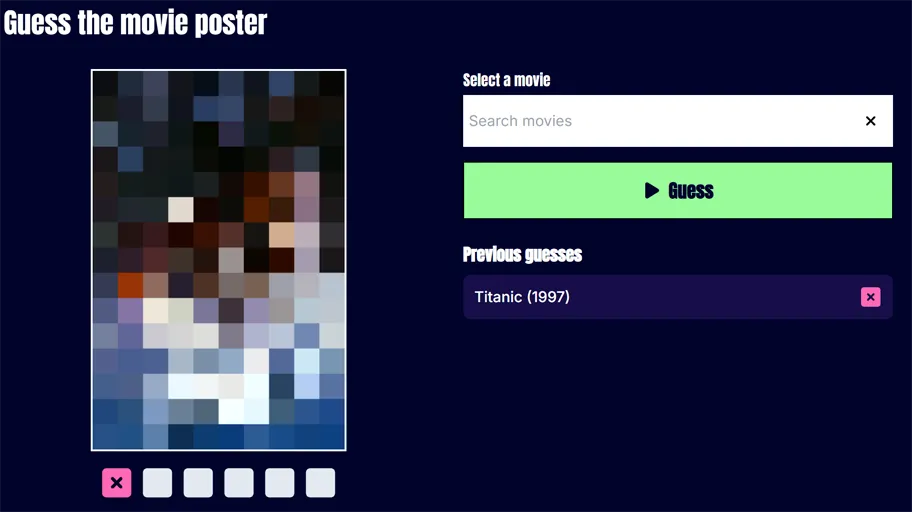
Posterdle blurred movie poster at the start of a timed round

Watch the poster emerge from blur

Start a posterdle round and the hidden poster loads in a distorted state. Shapes and colors exist, but titles and fine detail do not. The reveal progresses automatically while the timer counts down. Early seconds often tell you the broad genre: neon action, muted indie drama, animated primary colors, or horror contrast. Note those cues before you type anything.

2
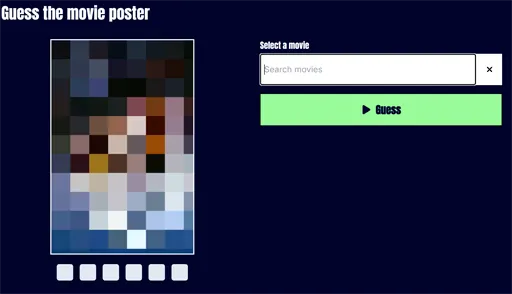
Posterdle poster becoming clearer with visible layout and color clues

Hunt for layout clues as focus returns

As the posterdle image clears, look for silhouettes, costume colors, centered heroes, stacked cast heads, giant title blocks, or landmark props. A partial face can narrow the decade even when the title stays unreadable. Wrong guesses still count against your six attempts, so throw a title only when the visual read supports it, not when you are guessing a random favorite.

3

Submit the film title before time or guesses run out

Type the movie name and confirm your entry. A correct title ends the posterdle puzzle immediately and records how quickly you solved it. Miss six times or let the timer expire and the answer appears for review. Share your time if you want friends to compare reflexes on the same poster.

Artwork memory instead of word lists

Most puzzles on Wordles.org train spelling and elimination. Posterdle trains whether a rectangle of color belongs to a specific release you saw once on a streaming homepage. That shift changes how wins feel. You are not chasing green tiles. You are matching a mood, a marketing layout, or a famous silhouette to a title stored somewhere in the back of your head.

Because the clue is visual, posterdle pulls different players to the top on different days. Someone weak at crosswords might nail an animated family film from three color bands alone, while a word-game regular might struggle until a actor's profile finally resolves.

The twenty second tradeoff

Timer pressure is the engine. Guess at second four and you might score a flashy fast solve on a poster you already know. Wait until second fifteen and the image may finally show the one prop that makes the title obvious, but your time ranking suffers. Posterdle constantly asks whether certainty is worth the clock.

That tension mirrors real trivia nights where buzzing in early feels great until you are wrong in front of everyone. Here the cost is a wasted guess slot rather than public embarrassment, but the instinct to hold your breath for one more moment of focus is the same.

Reading posters like a design brief

Marketing departments repeat tricks. Action one-sheets love orange and blue with a hero centered and debris flying outward. Horror often crushes contrast and hides faces. Rom-coms float heads over a soft background. Animation pushes saturated shapes before characters are even recognizable. Posterdle rewards viewers who notice those habits.

When blur still hides names, ask simpler questions. Is the palette warm or cold? Are people tiny in a landscape or huge in close-up? Is the composition symmetrical or chaotic? Answering those narrows the search space faster than typing every franchise you like.

Six titles, no safety net on wild swings

Unlike tile games where each row teaches you more about the answer, posterdle wrong titles do not unlock partial credit on the poster itself. A miss simply burns one of six slots. That makes disciplined guessing important. Throw a blockbuster only when the layout truly fits, not because you hope luck saves the round.

When you do solve a posterdle puzzle, the full sharp poster appears and the title feels earned in a different way from finishing a word grid. You recognized a piece of cinema culture from a smear of color that slowly became art again. That snap of recognition is why the game keeps a foot in movie fandom rather than pure puzzle mechanics alone.

FAQs about Posterdle

Posterdle is a movie poster guessing game. You identify a film from artwork that starts blurred and gradually becomes clearer while a short timer runs.

You typically have about twenty seconds to recognize the poster, plus up to six title guesses if you need them. The exact feel is tuned for quick rounds rather than long research sessions.

You can submit up to six movie titles. Each wrong guess uses one attempt, so early random titles can hurt even when the poster later becomes obvious.

Yes. The poster starts difficult to read and gains detail as the reveal progresses. Waiting can expose faces, props, or typography that were invisible at the start.

Both are daily-style guessing games built around a short clue that expands. Heardle uses audio snippets of songs. Posterdle uses visual poster art that focuses over time.

Color palette, composition, actor placement, costumes, iconic objects, and poster design trends by era all matter. Many solves come from layout memory before any text is legible.

Helpful but not required. Blockbuster posters with distinctive art give casual viewers a fair shot. Heavy cinephiles often recognize niche layouts faster once the blur lifts.