






Hardle
Word guessing Games like Hardle

Hardle

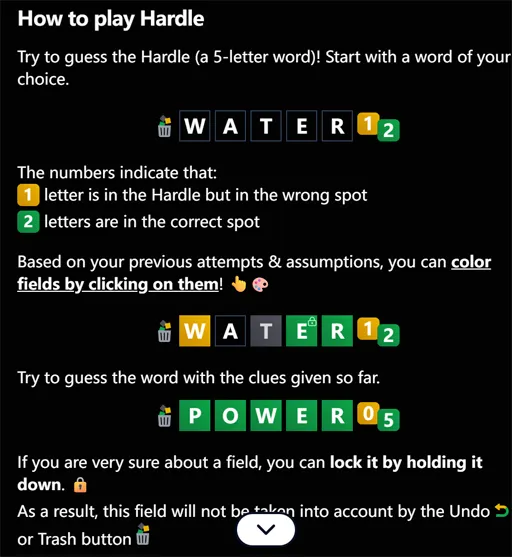
Hardle asks you to find a five-letter secret, but it refuses to paint the answer for you. After each guess you only get two counters: how many letters sit in the wrong seats, and how many already sit in the right ones. You decide which tiles deserve yellow, green, or gray by clicking them, based on those counts and whatever logic you trust so far.

That hand-painted grid is the whole personality of hardle. You can also hold a tile to lock it when you are sure, so Undo and Trash leave that letter alone. The tutorial walks through WATER showing one misplaced letter and two exact ones, then a cleaned-up coloring pass, then POWER with five greens. The basics are short. The live puzzle is, in the game's own words, much hardler.

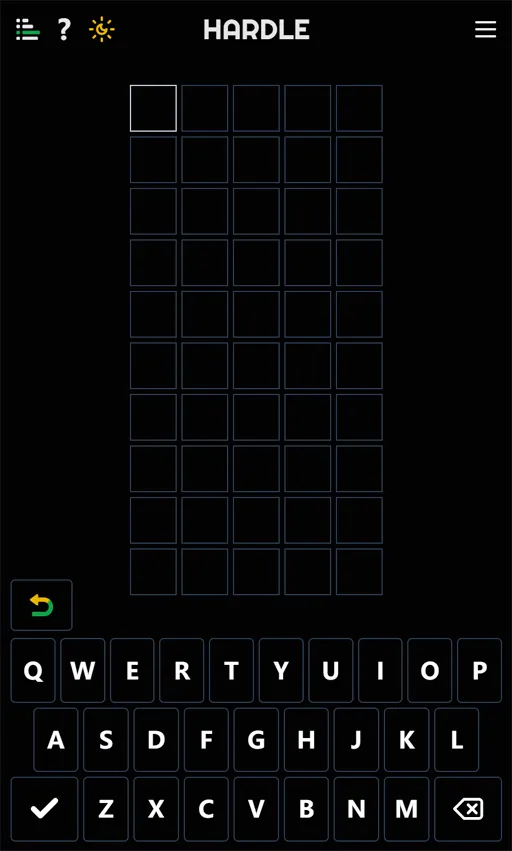
You can also open the official board at hardle.org.

How to Play Hardle

1
Hardle first guess WATER with yellow 1 and green 2 count markers

Guess any five-letter word to start

Try to guess the Hardle, a five-letter word. Start with a word of your choice, for example WATER. After you submit, two numbers appear beside the row.

2
Hardle count legend with yellow wrong-spot and green correct-spot numbers

Read the yellow and green counts

The yellow number shows how many letters are in the Hardle but in the wrong spot. The green number shows how many letters are already in the correct spot. The game does not mark which tiles those counts belong to.

3

Color tiles yourself, then lock what you trust

Click fields to color them from your previous attempts and assumptions. Hold a field to lock it when you are sure. Locked fields are ignored by Undo and the Trash button. Keep guessing with the clues you have marked until a row shows zero yellow and five green.

Counts instead of automatic tile paint

Most browser word grids flash colors onto every letter the moment you press enter. Hardle withholds that shortcut. Submit WATER and you might see a yellow 1 and a green 2. You know three letters from that guess matter, yet the board stays quiet about which three. The next move is yours: click to paint a wrong-spot yellow, a dead gray, or a confident green until the painted row agrees with the two numbers.

That gap between information and markup is where hardle gets its bite. Two players can receive the same counters and still color different theories, then prove or kill those theories on the following guess.

Click to color, hold to lock

Coloring is not decoration. It is your running notebook. Tap a tile to cycle the mark that matches your current read of the yellow and green totals. When a seat feels settled, hold it to lock. The lock tells Undo and Trash to skip that field, which matters when you want to wipe a messy row without losing the one letter you already earned.

In the official walkthrough, WATER becomes a mixed row with a locked green E, then POWER arrives as a clean five-green finish with 0 and 5 on the counters. Use that pattern as a teaching example, not a spoiler for today's live secret.

Why the live board feels hardler than the tutorial

The how-to screen teaches the controls in a few beats. Real hardle stretches those beats across a secret you do not already know. Early guesses often leave you with a yellow count that could attach to more than one letter, and a green count that tempts you into locking too soon. Bad locks are expensive because they survive the cleanup tools you reach for when a row goes wrong.

A steady habit helps: keep the painted marks consistent with the two numbers on every row, change colors when a later guess proves a theory false, and only lock seats that have survived at least one confirming word. The tutorial ends with a wink that the actual game is much hardler. That line is the design brief, not a joke you can ignore.

Watch a round, then open the play frame

If you want to see the click-to-color flow before diving in, scroll to the short gameplay clip on this page. The poster image loads only when that block enters view, so the rest of the page stays light. After a quick look at how rows and counters behave, jump back to the embedded board and start with any five-letter word you like.

Hardle rewards players who treat each row as both a probe and a note-taking surface. Guess, read the counts, paint the story that fits, lock only what you trust, and keep going until yellow hits zero and green hits five.

FAQs about Hardle

After each guess, hardle shows two counters beside the row. The yellow number is how many letters from that guess appear in the secret word but sit in the wrong position. The green number is how many letters are already in the correct position. The counters only tell you how many of each kind exist. They do not point to the specific tiles.

Hardle leaves the mapping work to you. Using the two counts plus what you have learned from earlier rows, you click tiles to mark wrong-spot letters, correct letters, or letters you believe are out. That manual coloring is how you turn raw numbers into a working hypothesis for the next guess.

If you are very sure about a letter seat, hold the field down to lock it. A locked tile stays put when you use Undo or the Trash button on that row, so a confident green letter is not wiped by cleanup tools. Unlock only if you later decide the assumption was wrong.

When a guess lands every letter correctly, the counters read zero on yellow and five on green, and the full row can sit in green. Until then, keep submitting five-letter words, updating your colored marks, and locking only the seats you truly trust.