


















Cardle
Word guessing Games like Cardle

Cardle

Cardle

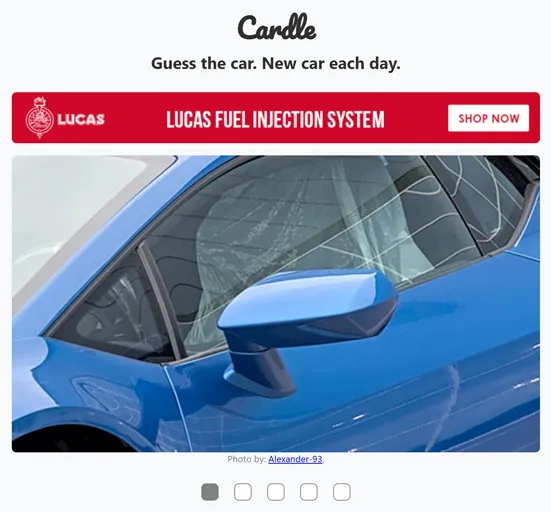
Cardle is built for people who notice cars in parking lots. Each round opens on a tight crop of a real vehicle, sometimes blurred, sometimes showing little more than a headlight ring or a slice of alloy wheel. Your job is to type the make, model, and year before the guess counter empties. A correct answer ends the puzzle on the spot. A wrong one does not waste the attempt entirely because the game replaces the photo with a wider frame that exposes more of the body.

That reveal loop turns cardle into a visual quiz rather than a spelling exercise. You are not hunting letters. You are matching metal, glass, and trim to something you may have seen in a review video, a dealership window, or traffic last Tuesday. A fresh car lands every day, so the habit feels light but the knowledge check can get surprisingly specific when the crop hides every badge.

How to Play Cardle

1
Cardle opening cropped car photo with limited body detail visible

Read the first crop

Cardle loads a partial car photo. Look at silhouette, ride height, grille shape, and wheel design before you type anything. The opening frame is meant to be hard on purpose.

2
Cardle answer form with make model and year fields after a guess

Enter make, model, and year

Type the manufacturer, model name, and model year into the answer field, then submit. You have 5 attempts total. Green feedback marks a correct field. Red means try another value for that slot.

3

Let misses widen the photo

Each incorrect cardle guess unlocks a clearer image. Use the extra bodywork, badges, or cabin glass to narrow the field. Solve within five tries or see the full car revealed at the end.

Crops that force you to look closer

Most guessing games on this site hand you symbols or audio. Cardle hands you bodywork. The first frame might hide the badge entirely, which pushes you toward proportions: is the roofline fastback or upright, are the arches pumped for an SUV, does the window line slope like a coupe. Those questions sound technical until you realize you already answer them subconsciously when a car passes on the street.

Because the photo is photographic rather than illustrated, small tells matter. LED daytime running light signatures, mirror shapes, door handle placement, and even paint texture can separate two models that look alike at a distance. Cardle turns that casual glance into the core skill.

Three fields, one real automobile

Asking for make, model, and year together raises the bar above a simple brand quiz. A correct manufacturer still leaves work if you pick the wrong generation. Cardle therefore rewards people who track facelifts and model years, not only logos. Someone might nail the marque on guess one yet still need a wider photo to decide whether they are looking at a mid cycle refresh or the outgoing chassis.

If you are newer to car trivia, start broad on early tries when the crop is tight, then tighten the year once badges and taillights appear. The widening photos are there to support that progression rather than punish curiosity.

Misses that act like a zoom lens

Wrong answers in cardle are not empty failures. Each one swaps the asset for a shot with more context, similar to a photographer stepping backward. That mechanic keeps rounds from ending on a single wild guess while still limiting you to five submissions. You feel pressure, but you also feel the puzzle open visually as you go.

Experienced players sometimes delay confident typing on purpose to study the first crop fully, knowing the second frame will arrive anyway if they are off. Beginners often discover a model name only after the grille suddenly fills the screen on attempt three. Both paths are valid because the images do the teaching.

A daily habit for drivers and passengers alike

Cardle fits a short break because a round can finish in under a minute when the car is familiar, yet it can stretch longer when the daily pick is obscure. Sharing how many guesses you needed is easy social currency among friends who care about motorsport, commuting, or design. The puzzle does not demand garage time or wrench skills. It only asks whether you can connect a shape on screen to a name you have encountered before.

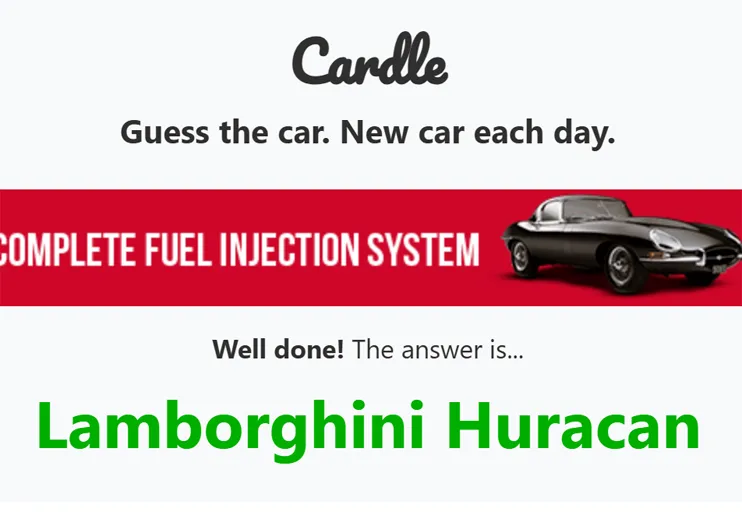
When the answer finally clicks, the full vehicle appears and the daily cardle entry feels less like a vocabulary win and more like recognizing a machine from real roads. That specificity is what keeps the quiz anchored in car culture instead of generic tile flipping.

FAQs about Cardle

You name the vehicle make, model, and year shown in the daily photo set. All three parts matter for a full solve, which keeps the quiz closer to real car spotting than guessing a brand alone.

You get five attempts per daily puzzle. Every submission checks your make, model, and year fields. Wrong tries still advance the photo to a less cropped version so you can recover with better visual information.

Cardle treats each miss as a hint. The next photo pulls back the crop so more of the vehicle appears. That design rewards patience and observation instead of random early titles.

A new car challenge typically arrives once per day around midnight. Everyone sees the same mystery vehicle that day, which makes comparing guess counts with friends straightforward.

Helpful, but not mandatory. Mainstream models with distinctive styling give casual players a fair shot once the photo widens. Enthusiasts often recognize rare trims earlier from wheel or fascia details alone.

Green confirms that part of your entry matches the answer. Red tells you to change the make, model, or year value you entered for that field while keeping correct pieces locked in place.