








Citydle
Word guessing Games like Citydle

Citydle

Citydle

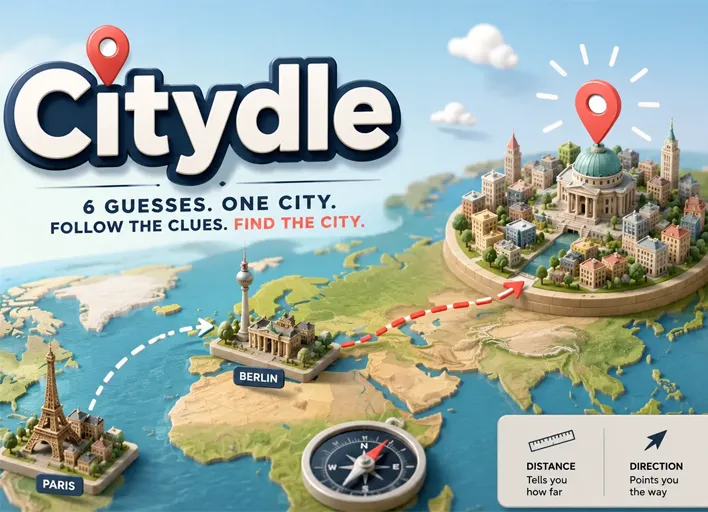
Citydle hides one real city each day, usually a capital or a place large enough to show up on a classroom wall map. You do not begin with borders shaded or continents labeled. You begin with a blank guess and six chances to shrink the world until the name clicks. Every wrong entry still teaches you something because the game answers with numbers and arrows instead of silence.

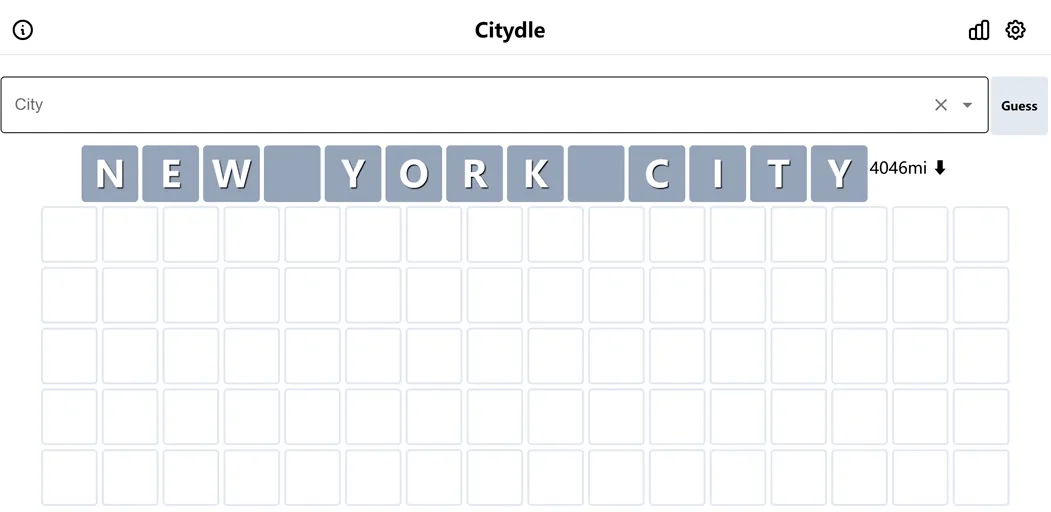
That feedback loop is what separates citydle from a trivia flashcard. Distance tells you how far off you were. A compass arrow points toward the target along the globe. Color bands flag whether you touched the right continent or slipped into the correct country. A guess that felt close might still be thousands of kilometers away, which is half the humiliation and half the fun.

How to Play Citydle

1
Citydle guess field with city name autocomplete suggestions

Name any city to open the map

Start typing on the onscreen keys or your physical keyboard. Citydle suggests matches as letters appear, which helps with long or unfamiliar spellings. Pick a city from the list or finish typing, then press Enter to lock the first probe.

2
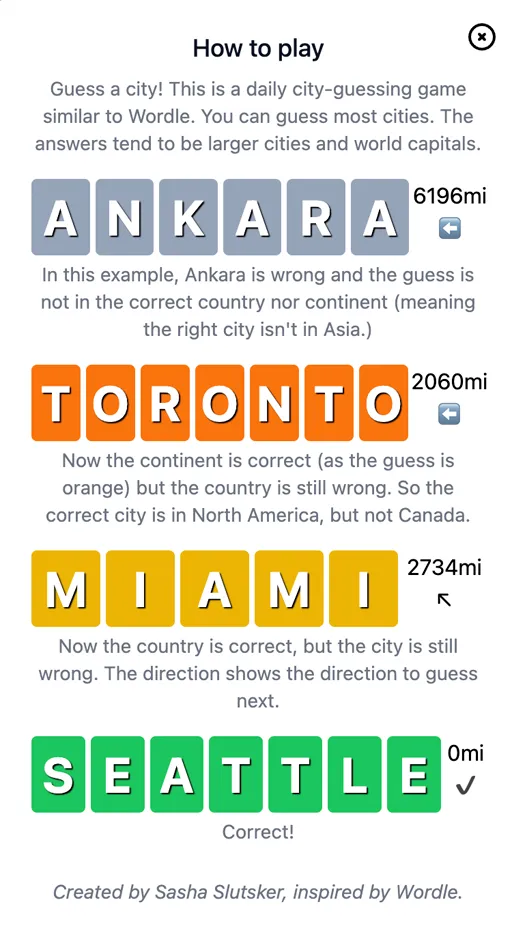
Citydle feedback row with distance number direction arrow and color hints

Read distance, direction, and colors

Each row shows how many kilometers sit between your guess and the answer, plus an arrow aimed at the hidden city. Orange means the right continent but the wrong country. Yellow means both continent and country match. Gray means neither region lines up.

3

Close in before the sixth row fills

Use shrinking distances to hop toward the bullseye. When the count hits zero and the row turns green, you have named the daily citydle answer. Miss on all six rows and the solution appears so you can study what you overlooked.

Geography with a six row budget

Citydle borrows the daily ritual from word puzzles but swaps letters for latitude and longitude. The pressure is not finding a five letter string. It is spending only six probes to triangulate a whole municipality on Earth. Waste an early guess on the wrong continent and you still learn the hemisphere, yet you have burned one of your scarce rows.

That scarcity shapes how veterans open. A random capital on another landmass is not stupidity if it anchors direction. The first row is often cartography, not bravado.

Arrows that argue with your instincts

Distance alone can lie to gut feeling. You might swear two famous cities are neighbors until citydle prints four digits and an arrow pointing southeast. The compass cue forces you to picture great circle paths instead of flat map edges, which is where armchair travelers start sweating.

Combine the arrow with color bands and the board becomes a worksheet. Orange on row one locks a continent. Yellow on row three locks a country. From there you are choosing among major names inside that border while watching kilometers tumble.

When Paris is wrong but still useful

Imagine opening with Paris and seeing thousands of kilometers plus orange tiles. Europe is confirmed, yet the answer lies elsewhere on the continent. A follow up like Berlin might slash the distance and flip country feedback to yellow, telling you the target hides inside Germany. Each hop is a lesson in how far apart familiar places actually sit.

That narrative style of play is common in citydle circles. Players talk through rows the way pilots read instruments: continent secured, country secured, direction narrowing, final strike on attempt four or five. Surviving on row six with only a handful of kilometers left feels like catching a flight at the gate.

Built for map lovers and streak chasers

Citydle rewards people who collect capital cities the way others collect vinyl. It also flatters casual players who only know a dozen hubs because autocomplete fills the spelling gaps. Either way the session stays short, one puzzle per day, which makes it easy to keep a streak without clearing an hour on the couch.

If you want bragging rights, share a tight four row solve. If you want humility, watch a confident guess land on the correct country yet point an arrow straight toward the opposite coast. Citydle delivers both in the same six row frame.

FAQs about Citydle

You receive six attempts per daily puzzle. Each guess must be a recognizable city. The round ends in victory when you hit the exact name, or in defeat after the sixth miss when the correct city is revealed.

It measures the straight line gap between your guessed city and the hidden answer, usually in kilometers. A smaller number means you are warmer. Watching that figure collapse from thousands to hundreds to zero is the main way players navigate.

Orange confirms your guess sits on the correct continent but in a different country than the answer. Yellow means you are in the right country and continent. Gray tells you both region checks failed, so your next guess should probably leap to another part of the map.

Not from memory alone. Partial typing opens a dropdown of likely cities. That helper matters when the answer is a long or accented name you would never spell cold on a blank field.

Answers lean toward well known metros and national capitals rather than obscure villages. You can still type almost any city in the world as a guess, but the hidden target is chosen so a curious traveler has a fair shot.

Yes. The daily city resets on a shared schedule, so friends can compare how many rows they needed without spoiling different answers. Come back tomorrow and the globe picks a new location.