






9 Letter Wordle
Games similar to 9 Letter Wordle

9 Letter Wordle

9 Letter Wordle

Most people meet Wordle through its classic five-letter format, and then wonder what happens when the word gets longer. 9 Letter Wordle answers that curiosity by stretching the hidden target to nine letters while keeping the same six-attempt structure. The extra length means more possible words and a sharper demand on vocabulary, but the core logic stays familiar: enter a real word, read the color feedback, refine your theory, and keep going until you either land on the answer or run out of rows.

One meaningful difference from the original is that here there is no daily cap. You can play as many rounds as you like without waiting for midnight, and if you fall short of the answer you can jump straight into a new game rather than walking away empty-handed. That freedom makes it a useful practice space for anyone who wants to build comfort with longer words, or simply a more substantial puzzle for the days when five letters feel too quick.

How to Play 9 Letter Wordle

1
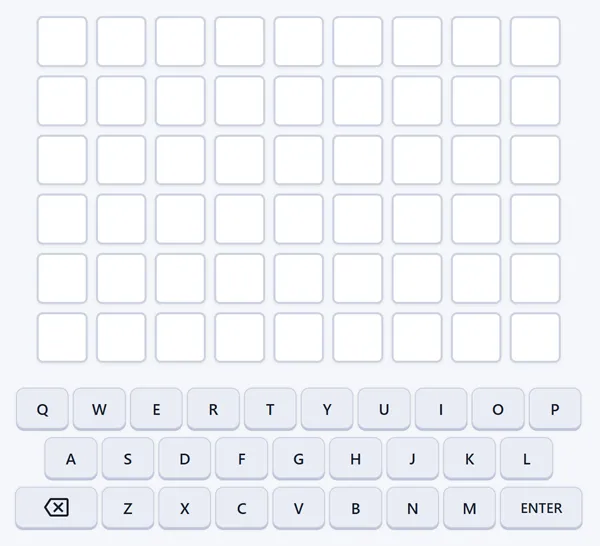
Typing a 9-letter word into the Wordle grid

Type a nine-letter word

Start with a word that covers a broad spread of common letters. Nine-letter words give you more information per guess, so think about coverage rather than trying to guess the answer immediately.

2

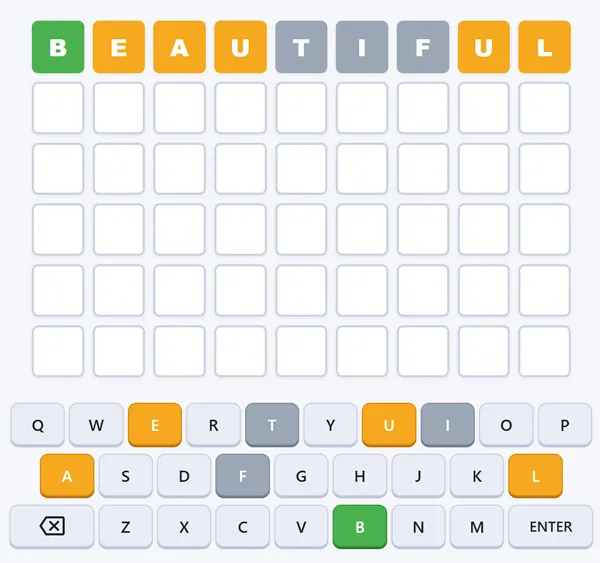
Read the color feedback

Green means the letter is correct and in the right position. Yellow means the letter is in the word but placed somewhere else. Gray means that letter does not appear in the answer at all.

3

Narrow down with each guess

Use what you learned to build your next word. Confirmed green letters stay where they are; yellows shift to a new position; grays get dropped entirely. You have six attempts to reach the answer.

Building a useful opening guess

With nine positions to fill, your first word carries more weight than it would in a shorter puzzle. A strong opener touches as many distinct high-frequency letters as possible: think about words that naturally contain several vowels alongside common consonants like R, S, T, N, and L. You are not trying to guess the answer on the first attempt; you are collecting as much signal as you can so that attempts two and three become genuinely targeted.

Words ending in common suffixes such as -tion, -ment, or -ing also work well as openers because they lock down letter positions that appear in a huge portion of the nine-letter word pool. Once the game confirms which of those letters belong, you can swap out the prefix to explore the remaining slots efficiently.

What to do when yellows pile up

Yellow tiles are encouraging and disorienting at the same time. They confirm that a letter exists in the answer, but they also tell you it is not sitting in the position you put it. When several yellows appear in a single guess, the temptation is to shuffle all of them simultaneously in the next word, which can create new conflicts. A cleaner approach is to move one or two yellows into fresh positions while keeping green letters fixed, then check whether the adjustments reveal new green placements before committing to a bigger reshuffle.

It also helps to treat yellow feedback as a process of elimination. If a letter appeared in position three and came back yellow, you now know it occupies one of the other eight slots. Narrowing that set with each guess eventually forces the letter into its correct column without guesswork.

The vocabulary challenge at nine letters

Longer words draw from a different part of your mental lexicon than shorter ones do. Many nine-letter answers come from technical, academic, or literary registers that feel less automatic than everyday five-letter words. Reading widely helps, but so does thinking in terms of word structure: prefixes like un-, over-, and inter- paired with common root words can rapidly generate candidates once the feedback rules out other possibilities.

When you are truly stuck, try working backwards from word endings rather than beginnings. English has a smaller set of valid nine-letter endings than beginnings, so narrowing by suffix and matching it against confirmed letters often cracks open a round that felt impossible from the front.

Using the unlimited format to improve

Because there is no daily limit, each finished game can become a short review session. Before starting the next round, spend a moment on the word you just discovered: how would you have arrived at it faster given the feedback you had? Replaying that decision tree mentally takes thirty seconds and builds the pattern recognition that makes subsequent games feel less like guessing and more like deduction.

Players who approach unlimited modes this way tend to notice a gradual shift in their opening choices and their response to feedback. The improvement is not dramatic from round to round, but over time the average number of guesses drops and the proportion of solved games rises. That trajectory is the real reward the format offers beyond simple entertainment.

FAQs about 9 Letter Wordle

The target word contains nine letters instead of five. That single change increases the vocabulary pool considerably and usually requires more deliberate guesses, since common two-syllable words no longer fit. The six-attempt limit and the green-yellow-gray feedback system are identical.
Yes. Unlike the original Wordle, which issues one puzzle per day, this version lets you start a new game whenever you finish. There is no waiting period between rounds.
Yes. Every guess must be a valid word from the game's dictionary. Random letter strings will not be accepted, so you need to think of actual nine-letter words even when you are experimenting with unusual letter combinations.
The answer is revealed at the end, and you can immediately start a fresh game. Because there is no daily limit, a failed round costs you nothing beyond that session.
They can be. A letter that shows up green or yellow in one position might appear again in a different position elsewhere in the word. Treat each tile independently rather than assuming a letter only occurs once.
The game includes a hint button if you are genuinely stuck. Using it sparingly preserves the challenge, but it is there when a particular word is completely outside your working vocabulary.
Yes. The on-screen keyboard handles all input on phones and tablets, so you do not need a physical keyboard to play.
Completely free, with no account required and no round limit.