







WeWordle
Word guessing Games like WeWordle

WeWordle

WeWordle

Wewordle turns the solo guessing habit into a head to head match on a single shared grid. You and another player online stare at the same five letter mystery word, but only one of you may type at a time. The opening move is picked at random, then turns alternate the way pieces swap control on a chessboard. Every guess you submit stays visible to your rival, which means strong clues can help them as much as they help you.

When the prompt reads Enter the word, the active row glows blue and the keyboard is yours. When it flips to Opponent's turn, the field grays out while you watch their entry land. There is no six guess cap here. The duel runs until someone spells the answer correctly, so patience and timing matter as much as vocabulary.

How to Play WeWordle

1
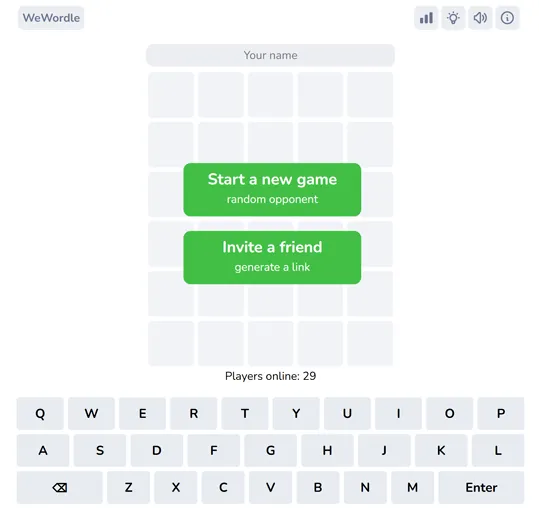
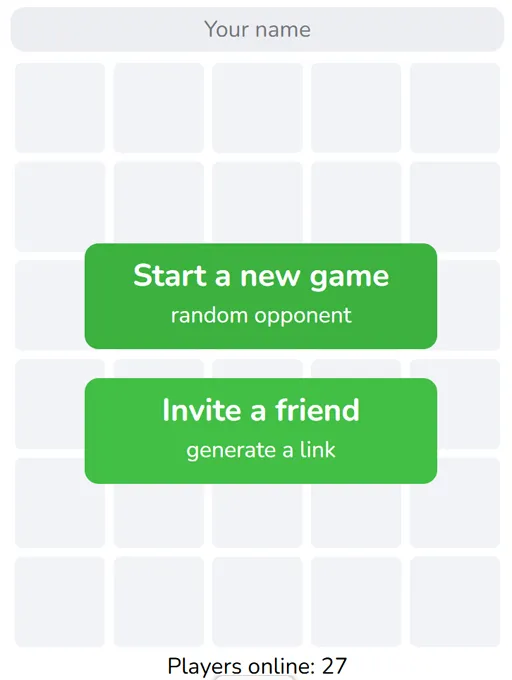
Wewordle lobby showing a two player match about to start

Join a live wewordle match

Connect with another player online and wait for the shared board to load. The game picks who moves first at random. You will see either Enter the word with blue highlighted cells or Opponent's turn while you wait.

2
Wewordle board with blue active cells during the player turn

Submit a five letter guess on your turn

Type any valid five letter word when the blue row is active, then press Enter. The hidden answer is identical for both players. Each guess must be a real word the dictionary accepts.

3

Read shared clues and strike first

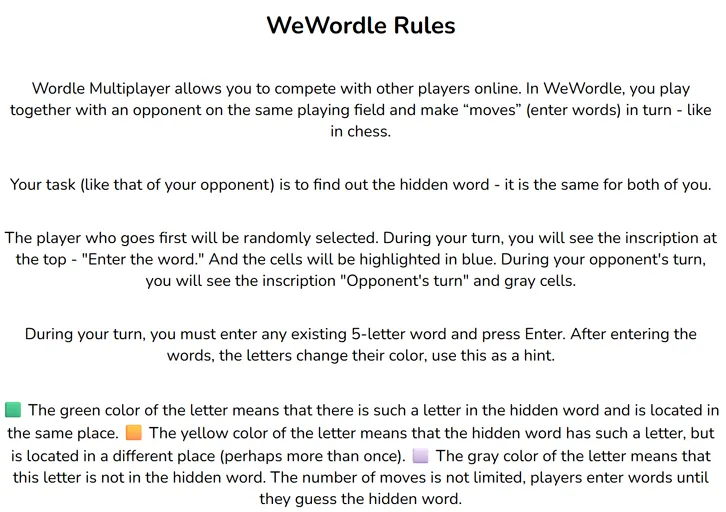
Letters turn green when correct, yellow when present but misplaced, and gray when absent. Turns continue without a move limit until one player names the wewordle solution.

One board, two minds

Most word puzzles on this site isolate you with a private grid. Wewordle does the opposite. Every row you place becomes public information. A brilliant opener that locks two greens might hand your opponent the finish on the very next turn if they read your pattern faster than you do. That shared visibility makes the mode feel closer to a tabletop duel than a quiet morning ritual.

The turn structure reinforces the tension. You cannot spam guesses back to back. While the interface shows Opponent's turn, you study their latest entry and plan a response for the moment blue cells return to your side.

Chess pacing on a spelling board

Random first move selection mirrors opening advantage in chess without requiring a full ruleset lecture. Whoever starts sets the tone: safe vowel spread or aggressive consonant probe. The second player inherits that information immediately and must decide whether to build on it or pivot toward a different word family.

Because wewordle never forces the match to end at six rows, slow careful play can beat reckless speed. A patient player might let an eager rival burn turns on narrow guesses while waiting for yellow tiles to reveal the skeleton of the answer.

Clues that help and hurt at once

Green and yellow feedback works the same as solo modes, yet the consequences differ when two people compete. A yellow E in slot two might tell you where not to place that letter, but it also telegraphs the same constraint to someone watching the board. Giving away too much early can be worse than submitting a bland neutral word that gathers letters quietly.

Experienced wewordle players sometimes enter deliberately vague guesses on their turn to learn without handing a roadmap to the rival. Others push hard when they sense the answer is one row away, accepting the risk that a sharp opponent will pounce first.

Why multiplayer spelling sticks

Wewordle scratches a different itch from daily solo puzzles. There is no midnight reset and no private score to hide behind. You win by reading letters under time pressure while another person is doing the same. Matches stay short enough for a lunch break yet tense enough that victory feels personal.

If you enjoy comparing vocabulary with friends but want something livelier than swapping result grids, the live turn based format gives you a direct contest without leaving the browser. Queue up, wait for blue cells, and see whether your next five letter word lands before theirs does.

FAQs about WeWordle

Each match pairs exactly two people on one online board. You are not solving alone against a daily puzzle. You are racing a real opponent who sees every row you enter and can use your clues on their own turn.

Yes. The hidden answer is identical for you and your rival. The challenge is who reaches that five letter solution first while turns keep passing back and forth.

Blue cells mark the row where the active player may type. When it is your turn, the interface shows Enter the word and the board invites input. During the other player's turn, cells appear gray and you wait.

No fixed cap. Players keep alternating submissions until someone solves the word. That open ended format rewards steady deduction instead of burning all six rows in isolation.

Green confirms a letter in the right slot. Yellow means the letter appears in the answer but belongs elsewhere, possibly more than once. Gray removes a letter from the solution. Because the grid is shared, those colors inform both competitors.

The opening move is chosen at random when the match begins. After that, turns strictly alternate. Planning around that coin flip is part of the strategy, especially when a strong first guess might set up your opponent.