



3 Letter Wordle
Games similar to 3 Letter Wordle

3 Letter Wordle

3 Letter Wordle

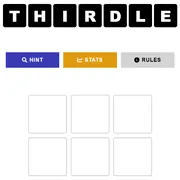
Three letters sounds like the easiest version of Wordle you could ask for. In practice it is anything but. English is packed with short words that share the same vowel or end in the same two consonants, and a single wrong assumption can leave your next guess no better positioned than your first. The narrow board removes the buffer that five-letter play offers: every tile you colour grey has to count for something, or you burn turns without getting closer.

On this page you can play as many games as you want. There is no daily limit and nothing to sign up for. Finish one round and start another whenever you feel like it, whether that means two games or twenty.

How to Play 3 Letter Wordle

1
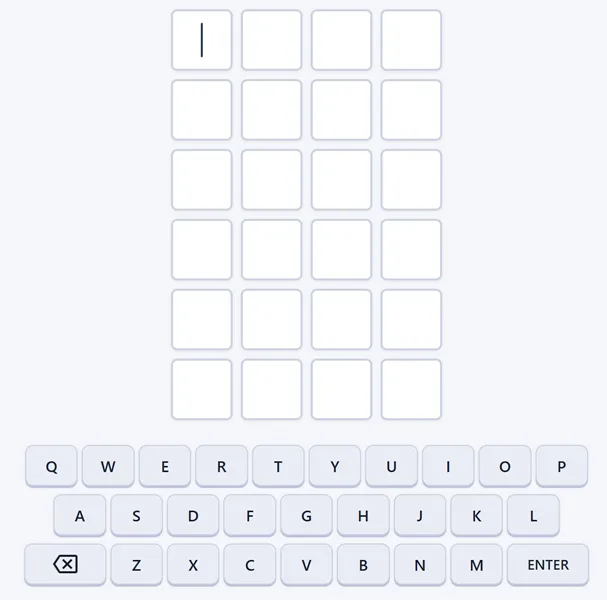
First guess on the 3 Letter Wordle board

Enter your first word

Type any real 3-letter word using the on-screen keyboard or your physical keyboard, then press Enter. Starting with a word that contains at least one common vowel gives you the most useful feedback straight away.

2
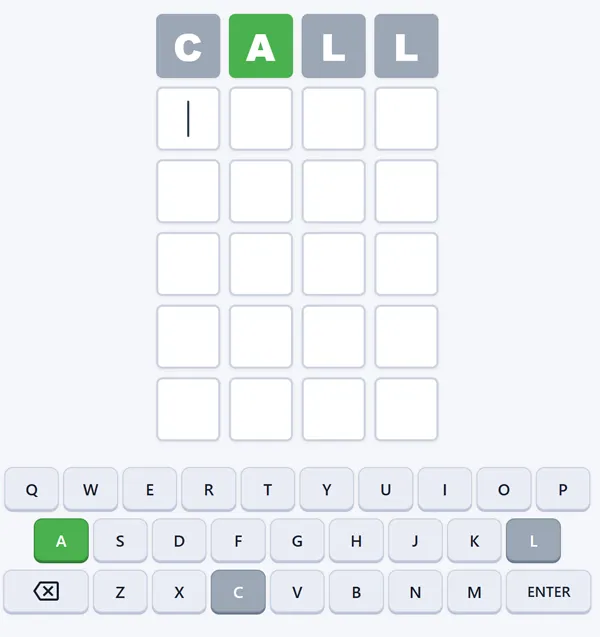
Colour tiles showing feedback in 3 Letter Wordle

Read the colour feedback

Each tile changes colour after you submit. Green means the letter is correct and in the right position. Yellow means the letter is in the word but placed in the wrong spot. Grey means the letter does not appear in the word at all.

3

Narrow it down

Use what you learned to build your next guess. Keep green letters exactly where they are, move yellow letters to a different position, and avoid any grey letters. You have six attempts in total.

Why three-letter words catch people off guard

Most adults feel comfortable with short words. They appear constantly in everyday reading and conversation, which creates a quiet confidence that rarely survives the first few rounds of this game. The issue is that three-letter words cluster tightly around a small set of vowel and consonant patterns. Words ending in -at, -it, -og, or -un each represent a family of possibilities, and confirming one letter often leaves several plausible answers still standing.

This density is actually what makes the puzzle enjoyable. When a yellow tile tells you a letter belongs somewhere else in a three-column word, there are only two remaining positions it can occupy. That constraint feels liberating when you think it through clearly, but pressured when the answer is still not obvious. The game rewards players who pause to consider structure rather than firing off whatever word comes to mind first.

Picking a useful opening word

A good opening guess samples letters that appear frequently in three-letter English words. Vowels are the obvious starting point: A, E, I, O, and U collectively appear in almost every short word in the language. Words like ATE, OAR, or AIR place vowels across multiple positions, which gives you the most immediate information about the shape of the answer.

If your opener returns a green tile on the first guess, resist the urge to celebrate and coast. Use the second guess to test consonants that appear often in that position. The goal in the first two turns is information, not a lucky early solve. Players who approach each round methodically tend to finish in three or four guesses far more often than those who rely on instinct alone.

Getting more out of yellow tiles

A yellow tile is sometimes underused. Players register that the letter belongs in the word, note the position it came from, and then place it somewhere else without fully thinking through the options. On a three-letter board, a single yellow tile combined with one green tile can narrow the answer to a handful of words. Taking thirty seconds to think through which arrangements are still valid is often enough to turn the next guess into the correct one.

Pay attention to repeated letters as well. Some three-letter words use the same letter twice, such as words ending in a double consonant. If you have confirmed a letter and all the obvious positions have been ruled out, consider whether it might appear more than once in the answer before giving up on it.

A short history of Wordle

Josh Wardle built the original Wordle in 2021 as a small gift for his partner, who enjoyed word puzzles. After sharing it privately with family, he released it publicly in October of that year. Growth was slow at first, then accelerated dramatically when Wardle added the shareable emoji grid that let players post their results without spoiling the answer. By early 2022 the game had tens of millions of daily players. The New York Times purchased it shortly after.

Variants like this three-letter version emerged from the community of players who wanted shorter sessions or a different kind of challenge. Wordles.org makes the format available without any restrictions, so you can play as many rounds as you want and share results with anyone you like.

FAQs about 3 Letter Wordle

Not necessarily. The shorter word length reduces the board to three columns, but it also shrinks the pool of valid guesses. Many three-letter words share the same vowel or consonant cluster, so a yellow tile can still leave a wide range of possibilities. Players often find it more demanding than expected.
Yes. This version has no daily limit. You can play back-to-back rounds for as long as you like, which makes it a practical option for a quick break or a longer session.
Your win rate, current streak, and guess distribution are saved locally in your browser. You can view them at any time through the statistics panel inside the game.
The game accepts real three-letter English words found in the dictionary. Proper nouns, abbreviations, and random letter combinations are not valid. If a word is rejected, it means it is not in the word list.
Yes. Activating hard mode requires you to include every confirmed letter in all future guesses. On a three-letter board this restriction is felt immediately, since there is very little room to manoeuvre.
Yes. Use the Create button inside the game to set your own word, then copy the generated link and share it. Anyone who opens the link will face the same puzzle you designed.
No. The game runs directly in your browser on any device. Open the page and you are ready to play.