




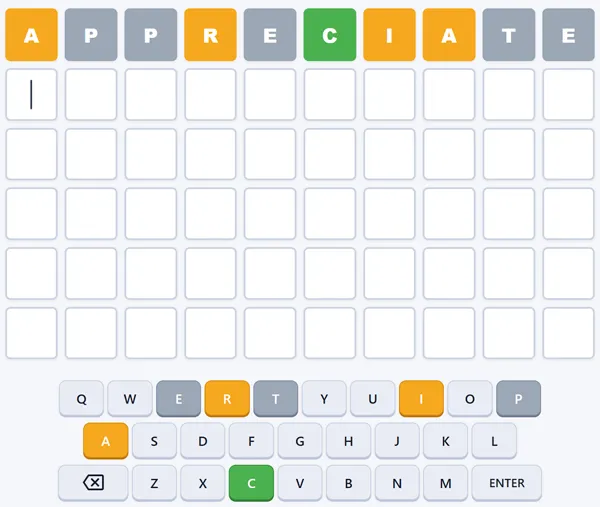
10 Letter Wordle
Word guessing Games like 10 Letter Wordle

10 Letter Wordle

10 Letter Wordle

A ten-letter answer changes the rhythm of Wordle more than adding one extra tile might suggest. The board is wider, the candidate pool is larger, and a guess that would feel decisive at five letters often leaves plenty of uncertainty here. 10 Letter Wordle keeps the familiar six-row structure while asking you to reason across a full decade of positions, which makes each round feel closer to solving a short anagram than finishing a quick daily puzzle.

On Wordles you are not locked to a single puzzle per day. Finish a round, reveal the word if you missed it, and load another challenge immediately. That open schedule suits players who want to train on longer vocabulary, share a custom word with someone else, or simply enjoy a heavier puzzle without waiting for tomorrow.

Gameplay video

How to Play 10 Letter Wordle

1
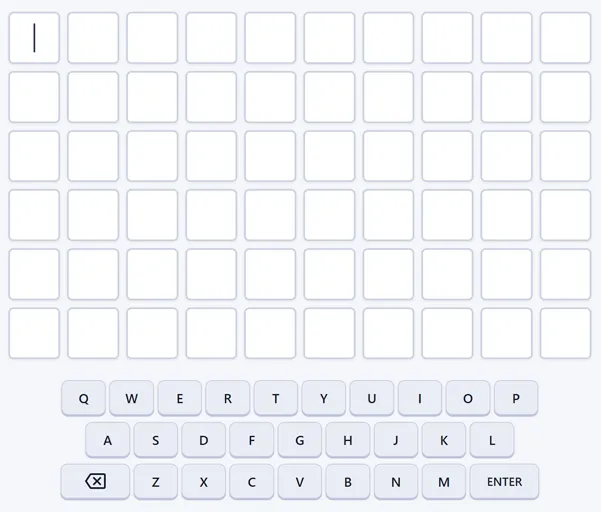
Entering a ten-letter guess on the Wordle board

Submit a real ten-letter word

Choose an opening word that spreads vowels and common consonants across the row. Every entry must be a valid ten-letter word from the built-in dictionary; random strings will not be accepted. Press Enter on a keyboard or tap the on-screen keys on mobile.

2
Green yellow and gray feedback on a ten-letter guess

Study the tile colors

Green locks a letter in the correct spot. Yellow confirms the letter belongs in the answer but not where you placed it. Gray removes that letter from consideration. With ten slots, a single guess can produce a wide mix of signals, so note each position before planning the next word.

3

Refine until you solve or run out of rows

Carry greens forward, relocate yellows, and drop grays. You have six attempts total. If the word still eludes you on the final row, the solution appears and you can start a fresh game right away.

Why ten columns feel different from shorter variants

Extra width changes how you read feedback. In a five-letter game, one strong opener can corner the answer quickly. With ten slots, even a productive first guess usually leaves several open hypotheses, because more letters means more ways to arrange the same clues. Players who rush tend to burn rows testing single hunches; players who pause to list which positions are still flexible often recover a row or two.

The wider grid also rewards words that test uncommon consonants early. Letters like V, K, and J appear less often in casual speech but show up regularly in ten-letter answers drawn from broader vocabulary. Treating the first guess as reconnaissance rather than a near-solution keeps the later rows purposeful.

Working through clusters of yellow tiles

Yellow feedback is useful but easy to misread on a long word. Each yellow tile tells you two things at once: the letter is present, and it cannot stay in the column where you just placed it. When three or four yellows land in one guess, the instinct is to shuffle everything at once. A steadier method is to anchor greens first, then move one yellow at a time into a fresh column while keeping the rest temporarily fixed.

Mapping yellows on paper or mentally numbering positions helps prevent repeat mistakes. If a letter was yellow in column four, columns four and every confirmed gray position are off limits for that letter on the next attempt. That simple exclusion often collapses a intimidating row of yellows into one or two plausible placements.

Spotting structure inside long English words

Many ten-letter solutions are built from familiar pieces rather than memorized wholesale. Prefixes such as re, un, and over combine with roots you already know, while endings like tion, ment, and ness occupy predictable slots once a few letters turn green. When feedback confirms part of a suffix, you can test new stems in the remaining spaces instead of searching the entire word blindly.

If you are stuck after several guesses, say the partial word aloud. Hearing the rhythm of syllables sometimes triggers a candidate that visual scanning missed, especially when only two or three positions remain unknown.

Using unlimited rounds to build skill

Because a new puzzle is always available, a missed word becomes a short lesson rather than a dead end. After the answer appears, reconstruct which clues you ignored: a yellow you forgot to move, a gray you accidentally reused, or an opening word that overlapped too many letters with your second guess. One minute of review before clicking New Game often improves the next opening choice.

Over time many players notice their average guess count drifting downward as they learn which letter sets cover the board efficiently. The progress is gradual, but the unlimited format makes that progress measurable in a way a single daily puzzle cannot.

FAQs about 10 Letter Wordle

Exactly ten. The board always shows ten columns per row, and every valid guess must also be ten letters long.

The answer is displayed at the end of the round. You can then begin a new puzzle immediately because there is no daily lockout.

No. Only real words from the game dictionary count. If your entry is rejected, try another ten-letter word you know is valid.

Yes. Feedback is evaluated per tile, so a letter may be green in one column and yellow or gray in another depending on how many times it truly appears.

Yes. Open the mode menu inside the game and switch to Hard. Confirmed letters must be reused in later guesses, which tightens the puzzle considerably on a ten-wide board.

Use the Create button in the game header. Type your chosen word, generate the link, and send it so the other player faces the exact puzzle you designed.

Statistics are stored in your browser. Open the stats panel in the game to review games played, win rate, streaks, and guess distribution.

No installation is required. The on-screen keyboard supports touch input, so you can play in a mobile browser the same way you would on a laptop.