













ToEarth

dle-games like ToEarth

ToEarth

toearth parks a rocket on the ice of Pluto with just enough fuel to leave the ground. The only way to get more is to answer. Each day brings seven prompts that ask you to name something, such as a sea animal, and plenty of answers will be accepted. They are not paid the same, though. A reply that half the players type first earns a few points, while a correct one that almost nobody thinks of can earn the full hundred.

Every answer that scores is fuel, and fuel carries the rocket from world to world: Pluto, Neptune, Uranus, Saturn, Jupiter, Mars, then Earth. Everyone gets the same seven prompts on the same day. You do not need an account and there is nothing to download.

How to Play ToEarth

1
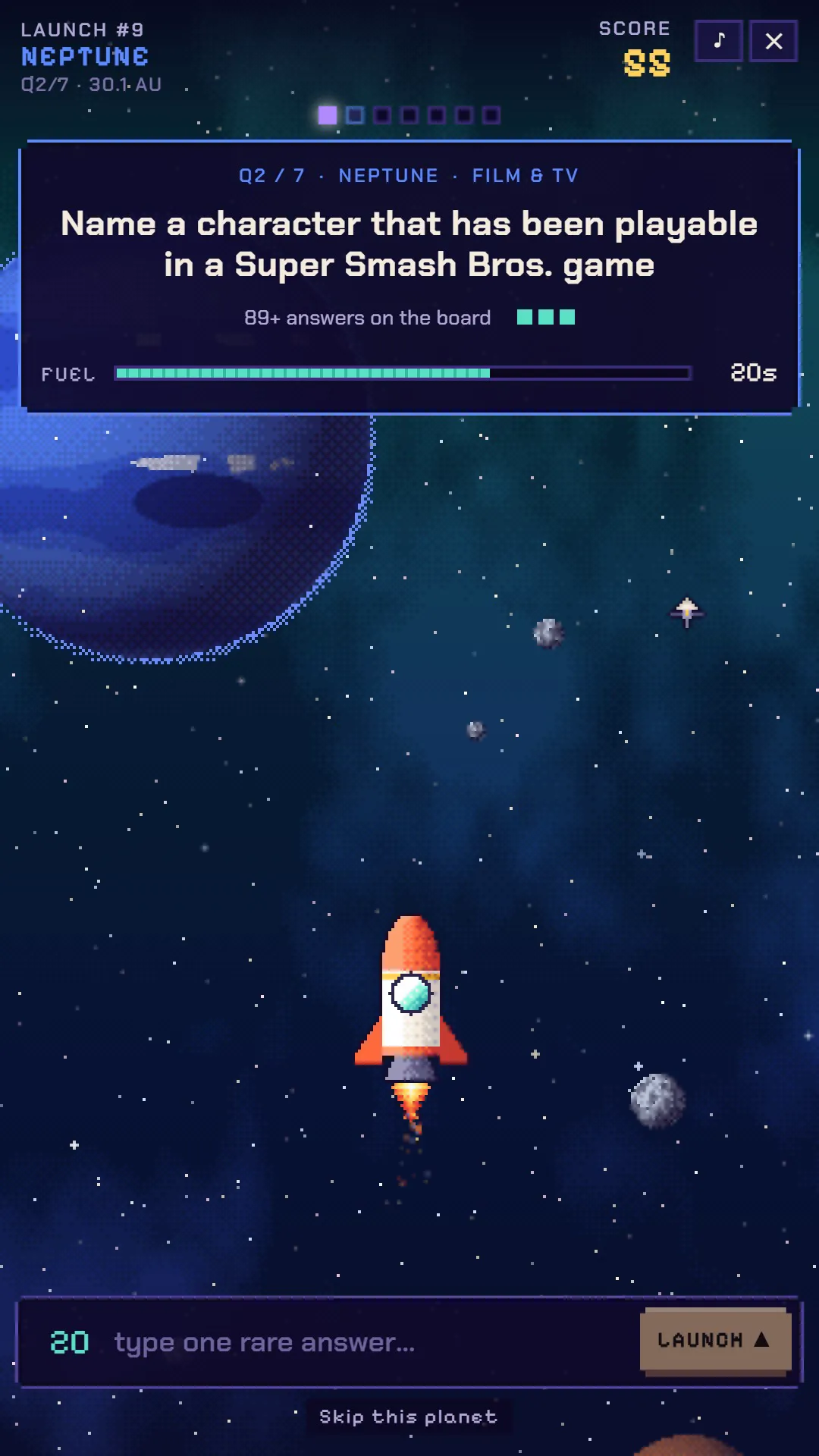
toearth question 2 of 7 at Neptune with a prompt, fuel bar, and answer box

Name something that fits the prompt

Each question asks you to name something, like a sea animal. Type one answer and press Launch. You get 30 seconds and three tries for each question.

2
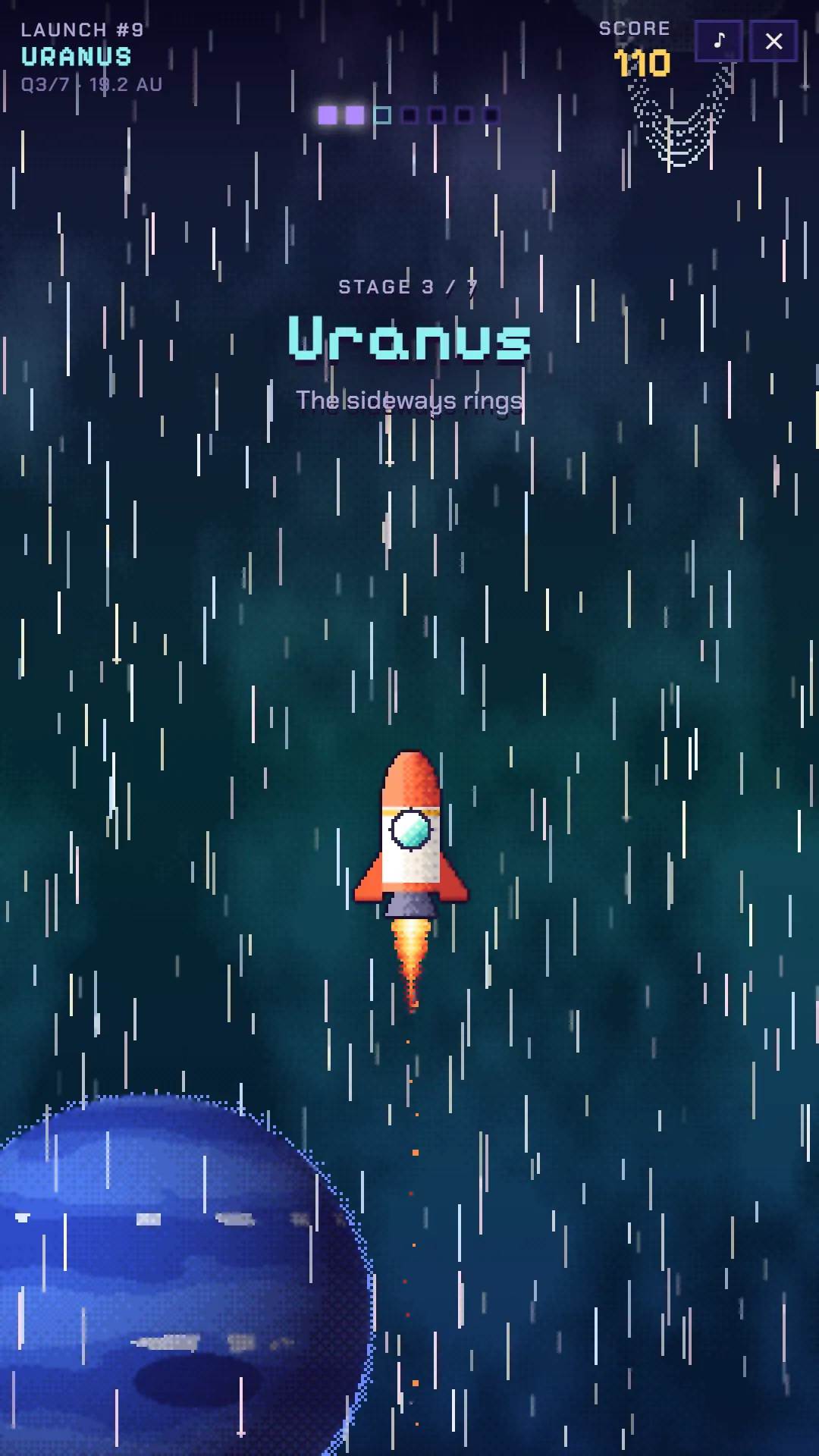
toearth stage 3 of 7 at Uranus with the rocket flying through rain

Rarer answers earn more points

An answer many people give is worth a few points. An answer almost nobody thinks of is worth up to 100. Every answer that scores moves your rocket to the next planet.

3
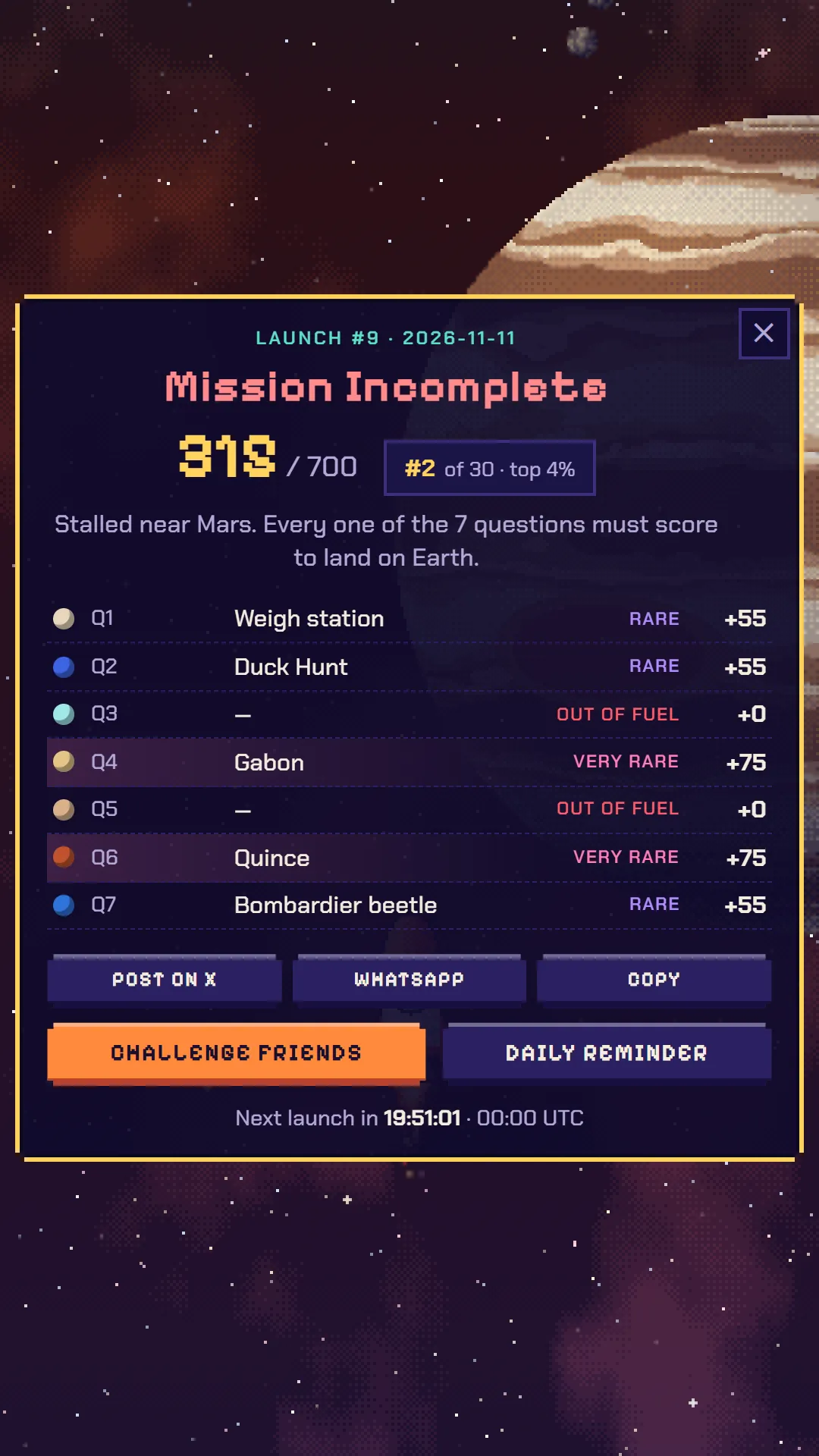
toearth flight report with a score out of 700, daily rank, and a row for each question

Score on all seven to land on Earth

Land on Earth by scoring on every question. If you miss one, the rocket stalls, but you still keep your points and your rank for the day. A new launch starts every day at 00:00 UTC.

Correct is not the same as valuable

Most trivia has one right answer, and everyone who finds it scores the same. toearth works the other way around. A prompt can have dozens of valid replies, and what you are paid depends on how few players think of yours. Take the sample prompt on the site, name a sea animal. Dolphin is correct and almost everyone says it, so it is worth 10. Sea pig is also correct and almost nobody thinks of it, so it is worth 100. Same question, ten times the points.

That changes what you do in the first few seconds. The skill is not knowing the answer, it is noticing which answer you would have skipped.

Fuel, flame, and the trip home

The story gives the points a physical meaning. A common answer is a short refuel, just enough to reach the next world. A rare answer is high grade fuel, so the engines burn hotter, the flame changes to the colour of that tier, and the rocket surges further. Seven scoring answers add up to exactly the fuel needed to cross the solar system and come down through the atmosphere of Earth.

Fail to score once and the tanks are short. The engines sputter, cut out, and the rocket explodes where it stalls. What remains is the flight report with how far you got, your points, and your rank for the day. Land all seven and the ship rides a column of fire down to Earth.

Who decides what is rare

Each prompt has a curated board. Before a launch goes live, editors place every accepted answer into a rarity tier, and that board then stays fixed for the day. Because nothing moves once the launch is out, every player is scored by the same table, and a rank of 2 out of 30 means the same thing to everyone on that board.

The sample report shows how the tiers look in practice. Gabon and Quince each came in as Very Rare for 75, while Duck Hunt and Bombardier beetle were Rare for 55. None of those are the first thing most people would type for their prompt.

Playing for a higher score

Skip the first idea. If it arrived instantly, it probably arrived for thousands of other players too. Then get specific. Bird is common, but a name like shoebill is not, and precise names, regional examples, and lesser known varieties tend to sit higher on the board.

Read the whole prompt, including anything in brackets. Some add a limit, such as no esports or a minimum number of votes on IMDb, and an answer that breaks it is not on the board. Then stay sure. An obscure answer only counts if it is truly correct, and a safe Uncommon at 35 beats a wild guess that misses and burns a try.

Spelling is forgiving where it is safe. Capital letters, accents, punctuation, extra spaces, St and Saint, Mt and Mount, a leading the, and simple plurals are handled. Wild misspellings are not. And watch the clock: 30 seconds per question, it keeps running through retries, and closing the tab does not pause it.

FAQs about ToEarth

By how rare the answer is. Every accepted answer sits in one of six tiers: Common is worth 10, Familiar 20, Uncommon 35, Rare 55, Very Rare 75, and Legendary 100. With seven questions a day, a flawless run is 700 points.

That question gives you no fuel and no points, and the rocket stays where it is. You can only land on Earth if all seven questions score. If one does not, the rocket stalls on the way and you still get your points and your rank for the day.

Yes, you get three tries on each prompt. A wrong guess costs one try, and the 30 second clock keeps running while you think of another. If all three tries fail, that question scores 0.

Only answers on the curated board for that prompt can score. A true answer that was not placed on the board gets 0 for that day. The site says these answers are reviewed afterward, and good ones are added to future boards.

The daily launch is free. All Access is a separate one-time unlock of $9.99, not a subscription. It adds Unlimited Practice and replays of every past launch in the Archive, on any device where you sign in with Google. Payments go through Stripe.

A new launch goes live every day at 00:00 UTC, and every player gets the same seven prompts. Your progress for the day is saved on the device you used, so you can close the tab and return before the reset.